Why your boiler is losing pressure in Florida

Step 1 of 3: Equipment

Why does my boiler keep losing pressure?

You top off the pressure gauge and a week later it's low again. In most homes outside Florida that usually points to the heating system running long hours in the cold. That's not what's happening here, where the boiler likely handles hot water or a small zone rather than the main heat. A boiler that keeps dropping pressure almost always has water leaving the system somewhere, and finding where is the first step.

A slow leak somewhere in the system, or a faulty pressure relief valve letting water out

Boilers are sealed systems. Water shouldn't leave them at all. If your gauge keeps creeping down, water is getting out somewhere, through a pinhole in a pipe joint, a leaking radiator valve, or a pressure relief valve that's opening when it shouldn't. Sometimes the leak is small enough that you never see a puddle. It just shows up as a lower number on the gauge every few days. A relief valve that drips is often the easiest to check, since you can usually see or hear water escaping near it. If the system holds pressure for a while then drops again, that points to the valve rather than a pinhole leak, which tends to lose pressure at a steadier rate.

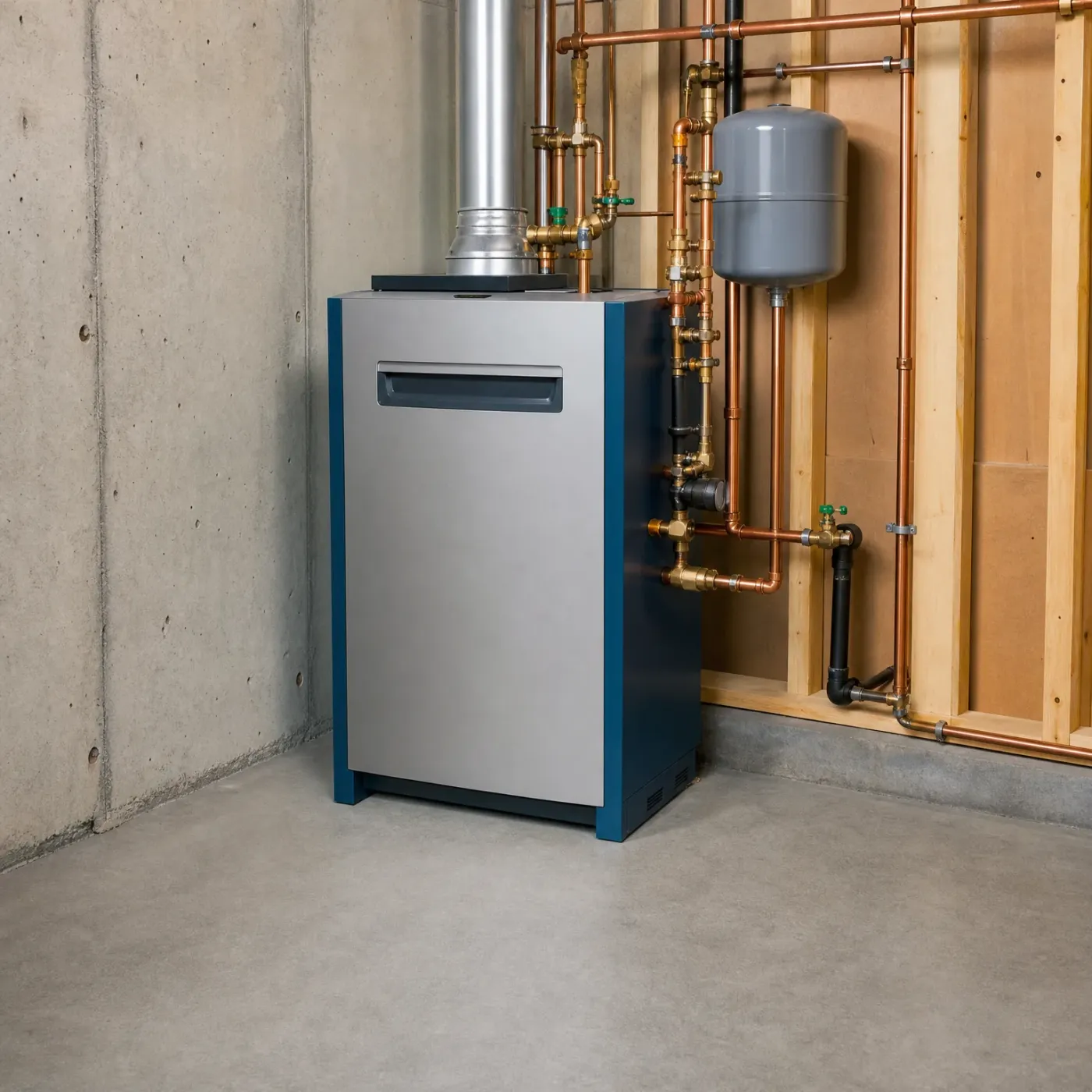
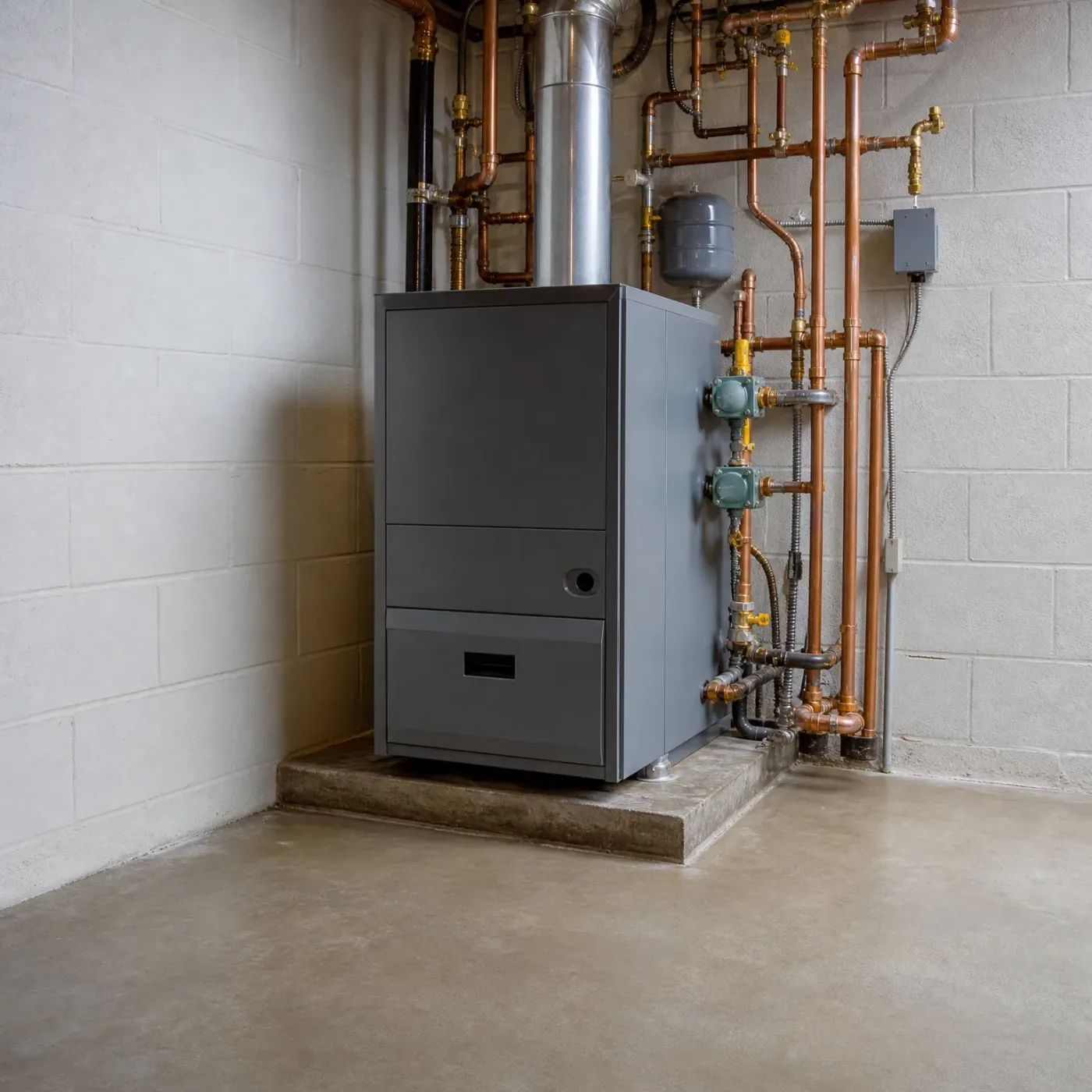
A gray boiler unit on a concrete pad in a basement corner, connected to copper piping, valves and a metal flue against painted concrete block walls.

Pressure holding steady

The gauge sits where it should, between 12 and 15 psi, and stays there. Water only leaves the loop from a slow drip somewhere, not from heat cycles, since your boiler runs rarely in a Florida home that heats with electricity. Check it once a month and you'll likely find no change at all.
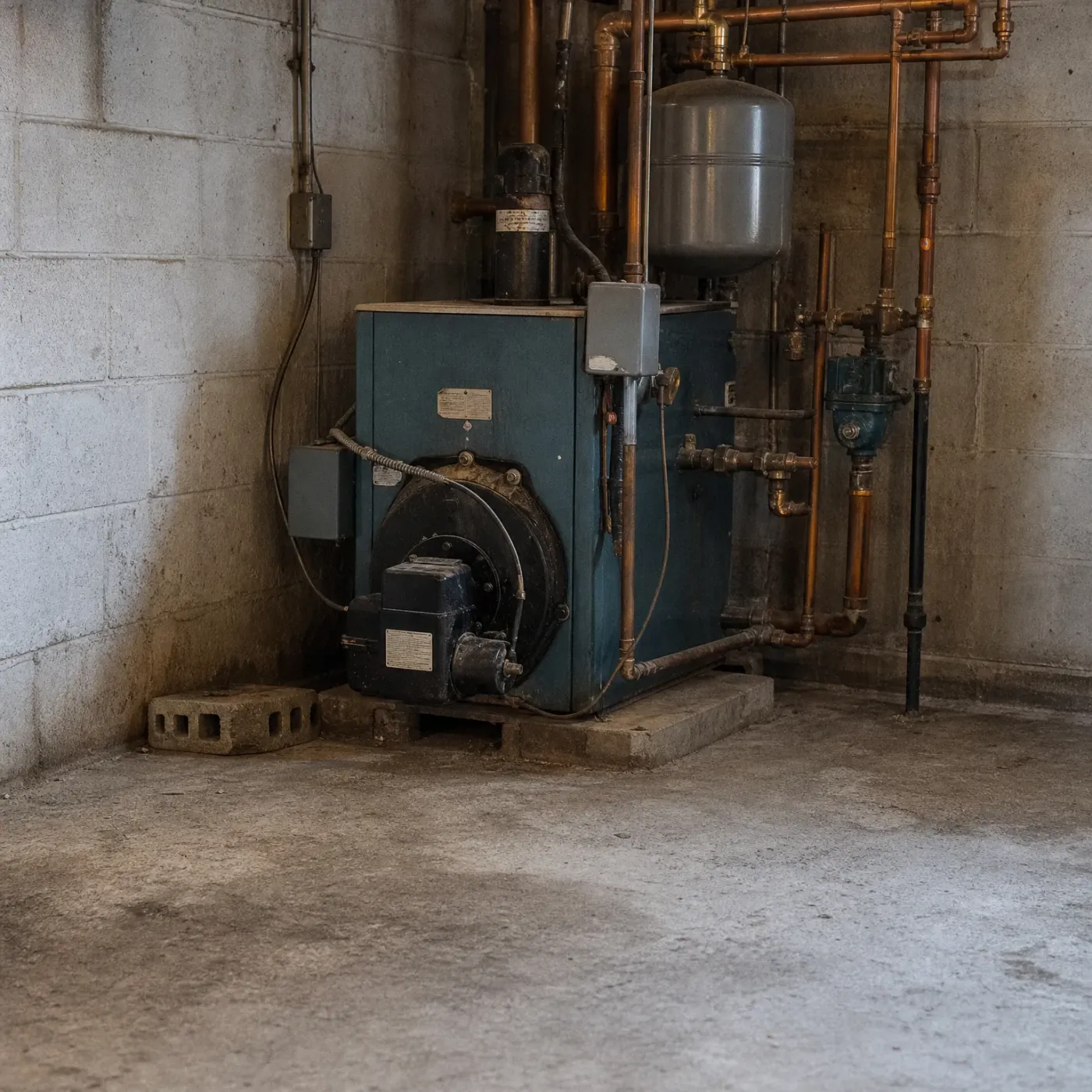
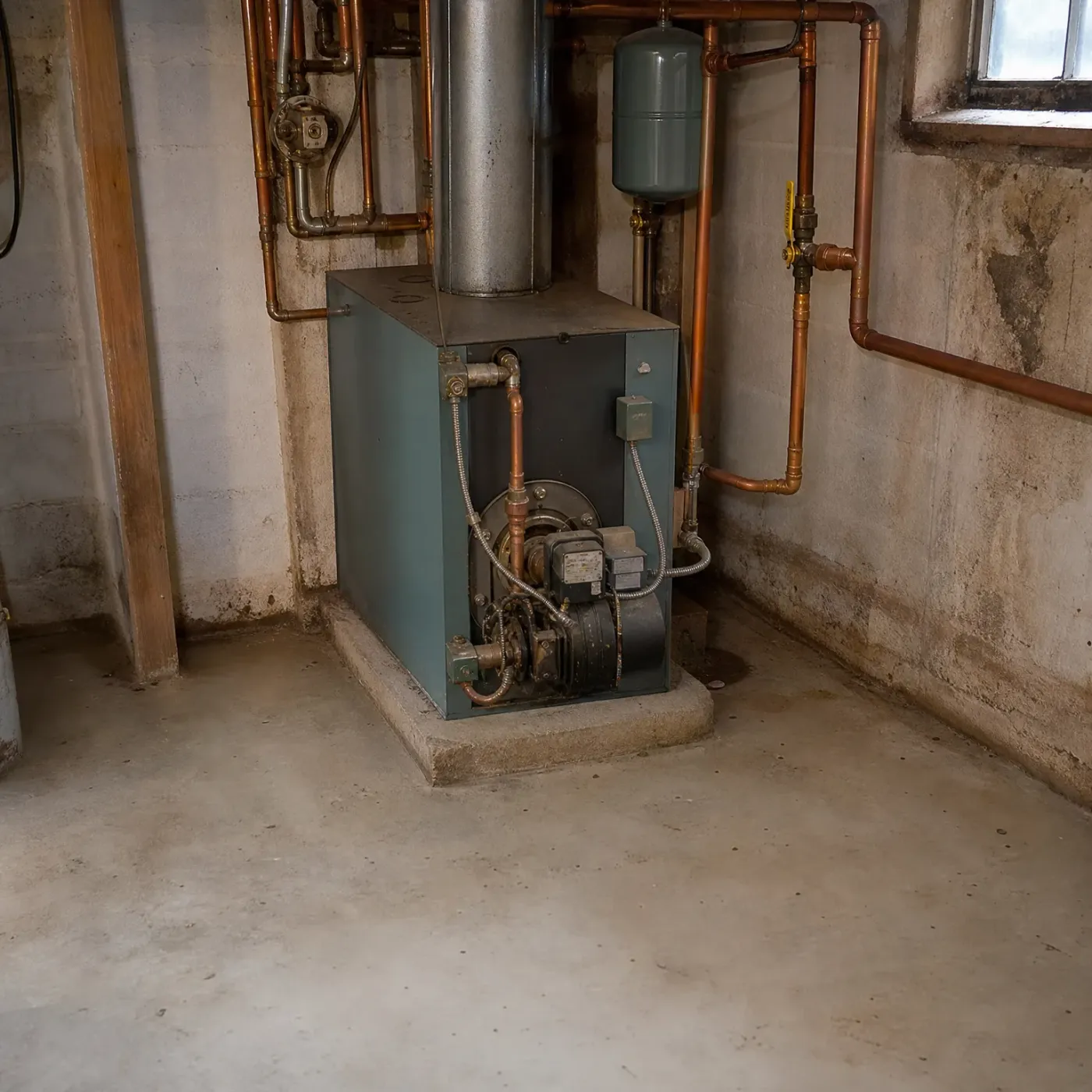
A blue oil-fired boiler with a burner unit sits on a concrete pad in a basement corner, with copper piping, valves and a gray expansion tank overhead against concrete block walls.

Pressure dropping again

You bleed a radiator or top off the loop and the needle still creeps back down within days. With the system barely running, that's not boil-off from heat. It's water finding a way out, through a fitting, a valve, or the expansion tank, and it needs a look before the loop runs dry.

Keep Topping Off or Find the Leak

Leave it and keep topping off

  • The gauge drops low enough to trip the lockout and the boiler won't fire until someone resets it.
  • A slow pinhole leak at a fitting gets worse under pressure, not better, since the metal around it keeps thinning.
  • Water finding its way out has to go somewhere, and that's often inside a wall or under a floor you can't see.
  • Air that enters with each refill works into the loop and can settle in the heat exchanger, where it causes its own problems.
  • Topping off hides the drop instead of fixing it, so the same call to refill the system keeps coming back.

Have the leak found now

  • A local contractor who services boilers in Florida homes checks the expansion tank, the relief valve and the fittings, since those are what usually fail here.
  • Finding the exact spot losing water means the repair targets that spot instead of guessing at the whole system.
  • Once the leak is sealed, the gauge holds at the same pressure without anyone refilling it.
  • A boiler that's not cycling for heat most of the year still needs that seal intact, since pressure holds or drops the same whether it's running or sitting idle.
  • Catching it now means a small fitting repair instead of a bigger one once the leak reaches a part that's harder to get to.
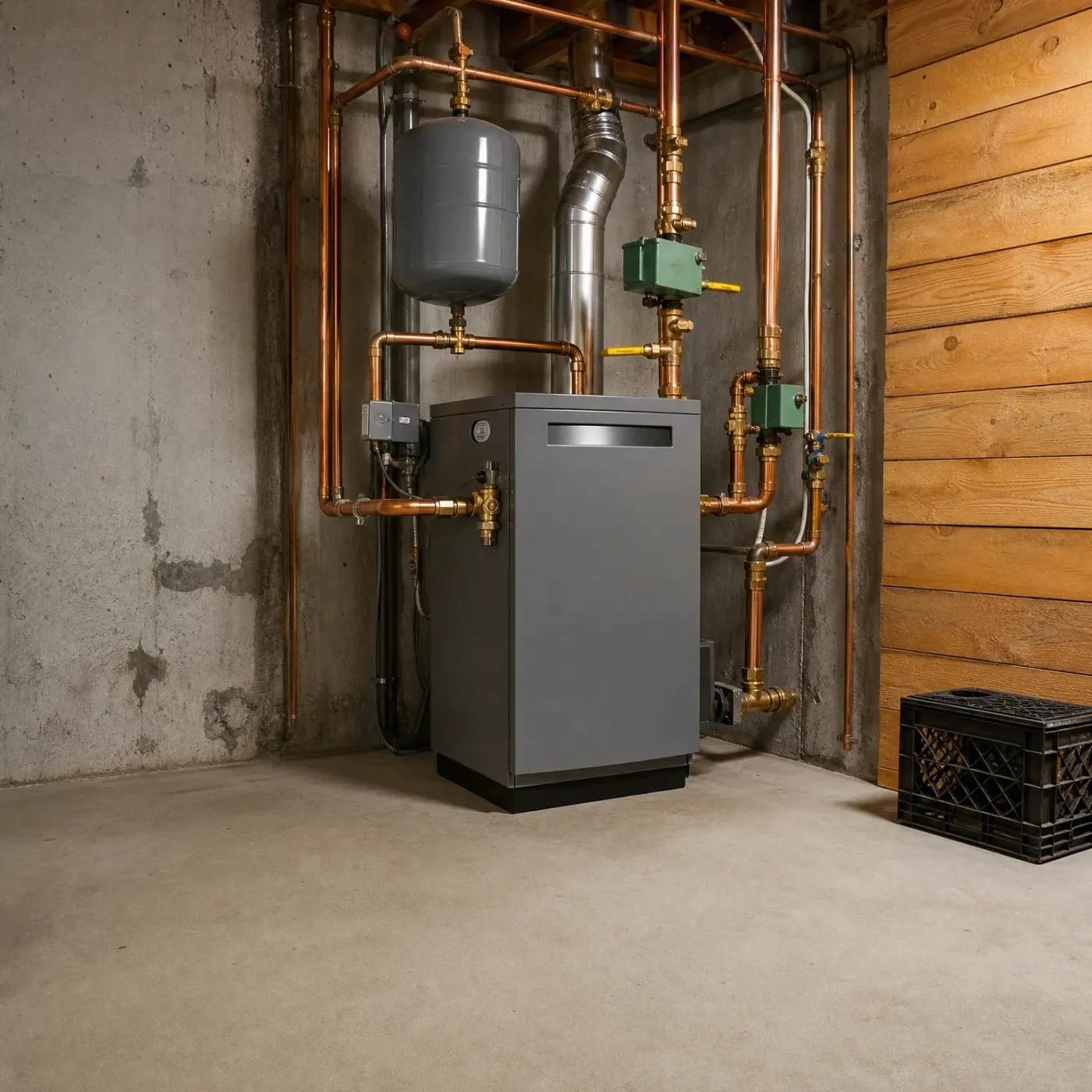
A gray boiler unit in a basement corner with copper piping, brass valves, a gray expansion tank, a metal flue duct, concrete walls and a wood-paneled wall, with a black plastic crate on the floor at right.

Pressure holding where it belongs

This is a boiler that gets looked at. The zone valves are labeled, the expansion tank is sized right, and every fitting along that copper run is dry. Nothing here is fighting the pressure gauge.

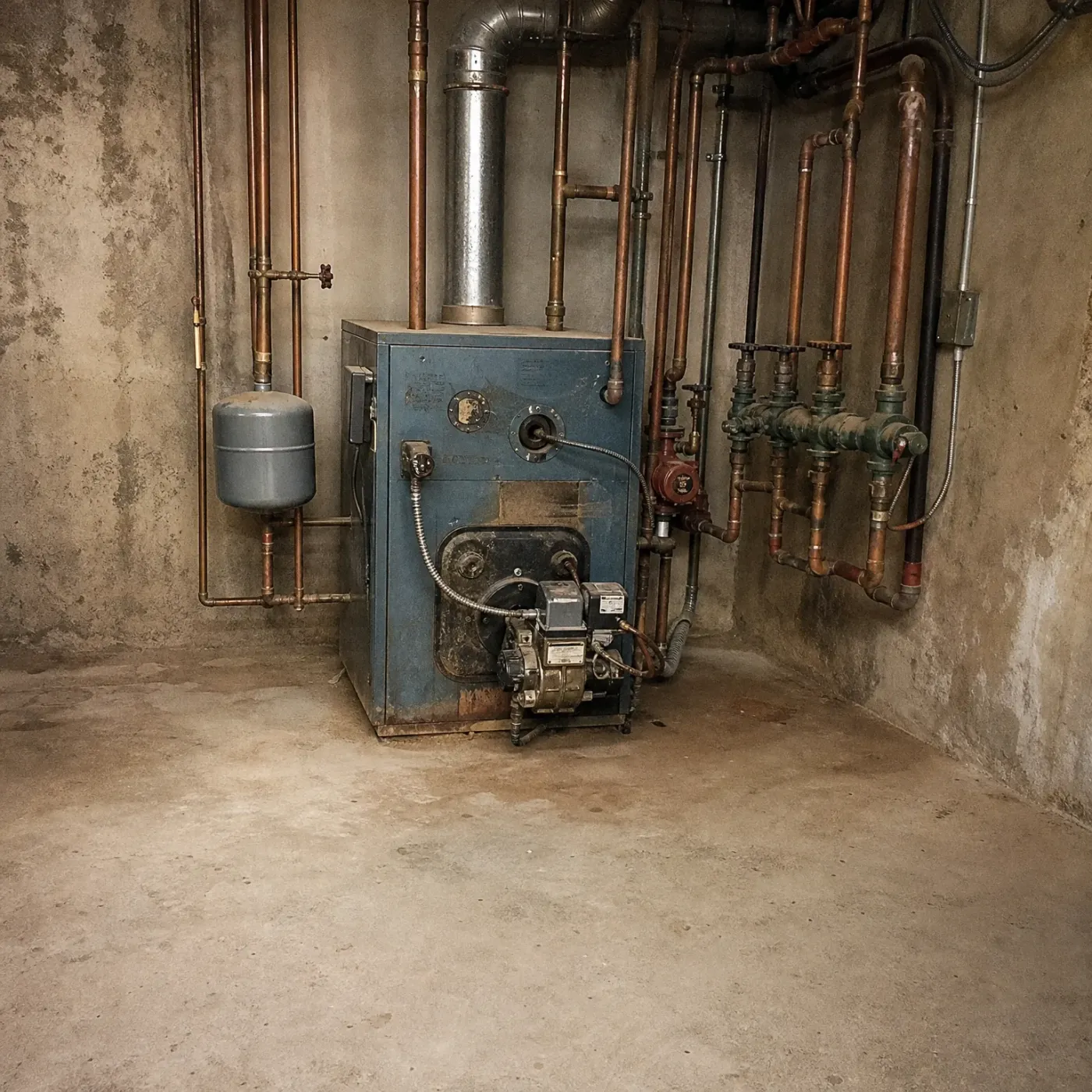
An older blue boiler with a burner unit stands in a concrete basement corner, connected to copper and steel piping, valves and a gray expansion tank on the wall.

A boiler running out of chances

That galvanized flue pipe and the old zone valves have been doing this job a long time. A boiler this age loses pressure for reasons that don't fix themselves, and in a house that barely calls on it, a slow leak can sit unnoticed for weeks before the gauge tells you.

A green oil-fired boiler with a flue pipe, burner and circulator pumps sits on a concrete pad in a basement corner, surrounded by copper piping and an expansion tank against concrete walls.
Before you get your boiler repair
A gray and blue floor-standing boiler in a basement corner, with a metal flue pipe and copper and black piping, valves, and a gray expansion tank mounted on an unfinished wood-framed wall beside a concrete wall.
After you get your boiler repair

Done looking for a boiler pro

A slow pressure drop on a boiler that barely runs is still a leak somewhere in the loop. It won't find itself, and topping it off every week just buys time until the lockout trips on a morning you actually need heat. Finding a pinhole in a fitting or a weeping valve takes someone who works on boilers in Florida homes, where this system idles most of the year and the usual cold-climate causes don't apply. That's a narrower job than most contractors see, which is why this goes to one who already knows what tends to fail on equipment that sits unused through a muggy summer and gets asked to work a handful of cold mornings. Send the request and that search is off your plate. One contractor gets it, local and licensed, so you're not fielding calls from five companies while your gauge keeps creeping down.

Where the water actually goes

  • A sealed boiler loop holds pressure through water alone, so any drop means that water went somewhere.
  • The expansion tank has a rubber bladder and a charge of air behind it, and when that bladder splits the tank waterlogs and pressure swings instead of holding steady.
  • An automatic air vent at the top of the system lets trapped air escape, and a worn one weeps water out the same way it lets air out.
  • A pinhole in a copper fitting can wet the insulation around it before any puddle ever reaches the floor.
  • The pressure relief valve is set to open at a fixed point, and a valve that opens even slightly below that point drains the loop a little at a time.
  • A boiler that only fires a handful of times all winter still expands and contracts each time, and a fitting that was already marginal works itself loose a little more on each cycle.

A boiler loop is sealed. There's no faucet, no drain, nothing using that water up. So when the gauge reads lower than it did last week, that water left the system somewhere, and it only has a few ways out. The expansion tank is one of them. It has a rubber bladder inside with air charged behind it, and that cushion is what lets the system handle water expanding as it heats. When the bladder splits, the tank fills with water instead of holding air, and the gauge starts swinging instead of sitting steady. The automatic air vent is another path. It's built to bleed off trapped air at the top of the system, and once the seal inside wears out, it bleeds water right along with it, a little at a time, with no puddle to point you to it. Copper fittings fail quieter still. A pinhole can sit inside the insulation and wet it through for a while before anything shows on the floor. The pressure relief valve is supposed to open at one fixed point and stay shut below it. If it's opening even a little early, it's letting the loop weep every time pressure climbs. And even a boiler that only fires a handful of times each winter still heats up and cools down each time it runs, and a fitting that was already a little loose moves a bit more on every cycle.

A smiling man in a gray long-sleeved shirt stands in a kitchen looking to the side, with open shelves of dishes, a white mug on the counter, a potted plant, and a view through a doorway into a living room.
A smiling bearded man in a green sweater sits at a white marble kitchen island with a mug, potted plant and bowl of fruit, in a bright white interior with open shelving and an arched doorway.
A smiling man with dark curly hair and a beard, wearing a dark green knit sweater, stands at a white marble kitchen counter with a dark blue mug, with open shelving, pendant lights and a houseplant behind him.
A smiling man in a green ribbed sweater stands behind a wooden table holding a ceramic mug of coffee in a kitchen with white subway tile, shelves of potted plants, and a bowl of fruit.

A boiler that only fires on the coldest mornings still has to hold pressure the rest of the year. The seal has to work in July as much as January, and nothing about sitting idle protects it.

An idle loop doesn't lose water on its own. If the gauge is dropping, something is letting it out, a fitting, a valve, or the expansion tank, not the low use of your system.

A smiling man with dark curly hair in a navy t-shirt sits on a gray couch indoors, with a large-leafed plant and a window in the background.
A bearded man in a plaid flannel shirt stands in a kitchen looking out a window toward snow-covered shrubs, with a steaming mug on the windowsill and potted plants on a shelf behind him.

Winter nights average 52°F statewide

Winter nights here average 52°F, so your boiler isn't cycling on and off the way one up north would. A pressure drop you catch now has time to sit there, since the next cold snap might be weeks off. Whatever's leaking won't wait for winter to get worse.

NOAA nClimDiv 1991-2020 county normals weighted by homes

  1. A contractor pressurizes the loop and watches the gauge for drift

  2. A dye or gauge test traces water to the exact fitting or valve

  3. The bad seal, valve, or expansion tank gets replaced

  4. The loop gets refilled and bled to settle at 12 to 15 psi

A boiler that holds pressure isn't a boiler that's being watched out of worry, it's one where the leak got found before it turned into a lockout. That's the whole answer here: the water went somewhere, something local is thinning or a seal gave out, and a contractor who works on these loops all year knows which fitting to check first because he's seen it fail the same way in other Florida homes that barely fire their boilers. You'll get matched with one licensed contractor near you, not a handful of companies competing for the callback, so there's no round of quotes to sort through and no guessing who actually showed up. Once that request is sent, the search is off your plate. The gauge should sit between 12 and 15 psi and stay there. If yours doesn't, that's the only fact that matters right now, and it's one someone local can chase down to the actual fitting instead of you topping it off again next week.

A dark wood cabinet with a paneled door and a ceramic pot of green foliage on top stands in a beige-walled room with white baseboard, a window at left, hardwood floor, and a patterned area rug.
A dark wood glass-front cabinet holding folded towels, woven baskets and a ceramic vase stands in a bathroom corner beside a window, with a potted fern and stacked towels on top and a freestanding tub partly visible at left.
A woven basket holding a green cushion and a cream fringed knit throw sits on a wood floor in a room corner beside a window and a dark wooden cabinet.
Corner of a room with a dark wood cabinet topped by a round vase, a linen curtain at a window, white baseboard, oak plank flooring with sunlight patches, and a woven jute rug in the foreground.
A dark wood sideboard against a pale wall holds a shallow stone bowl and a round ceramic vase with leafy branches, with sunlight from a curtained window falling across the wall, wood floor and woven rug.

It's off your list after this

Only one pro gets your request, so you hear from one company.

Hand it over

Asking costs nothing, and the choice to hire stays yours.