A pro who works on boilers
Why your boiler is leaking water in Florida
A boiler is a less common sight in Florida, where most houses heat with electricity, so water pooling around yours can be confusing to trace back. It might be a loose fitting, a failed valve, or pressure built up somewhere in the system. This page walks through what tends to cause it and what a repair involves, so you know what you're dealing with before someone comes out to look at it.
Match me with a proA boiler leaks water for one of a few reasons: a loose or corroded fitting, a failed pressure relief valve, or a crack in the tank itself from age. The pressure relief valve is the most common cause. It opens on purpose when pressure inside the system climbs too high, so water dripping from that valve is doing its job, not failing at it. The problem underneath is usually something raising the pressure in the first place, like a faulty expansion tank or a valve that's stuck. If the leak is coming from the tank body rather than a valve or fitting, that's corrosion working from the inside out, and it does not stop on its own. Since boilers are uncommon in Florida homes, parts and knowledge of them can be harder to track down locally than for the electric systems most houses here use. Left alone, a leak like this gets worse, not better, and can damage the floor or whatever sits beneath the unit.
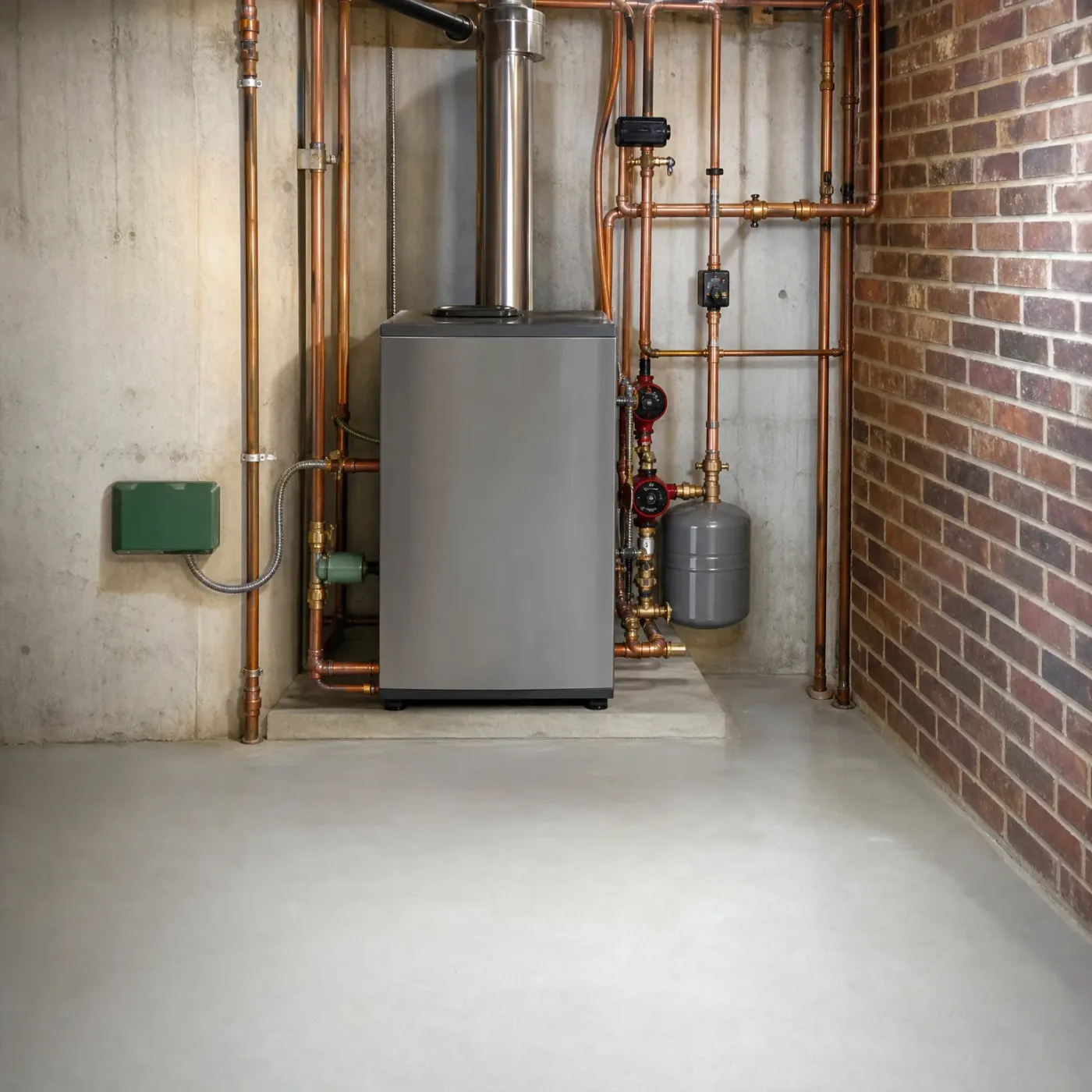
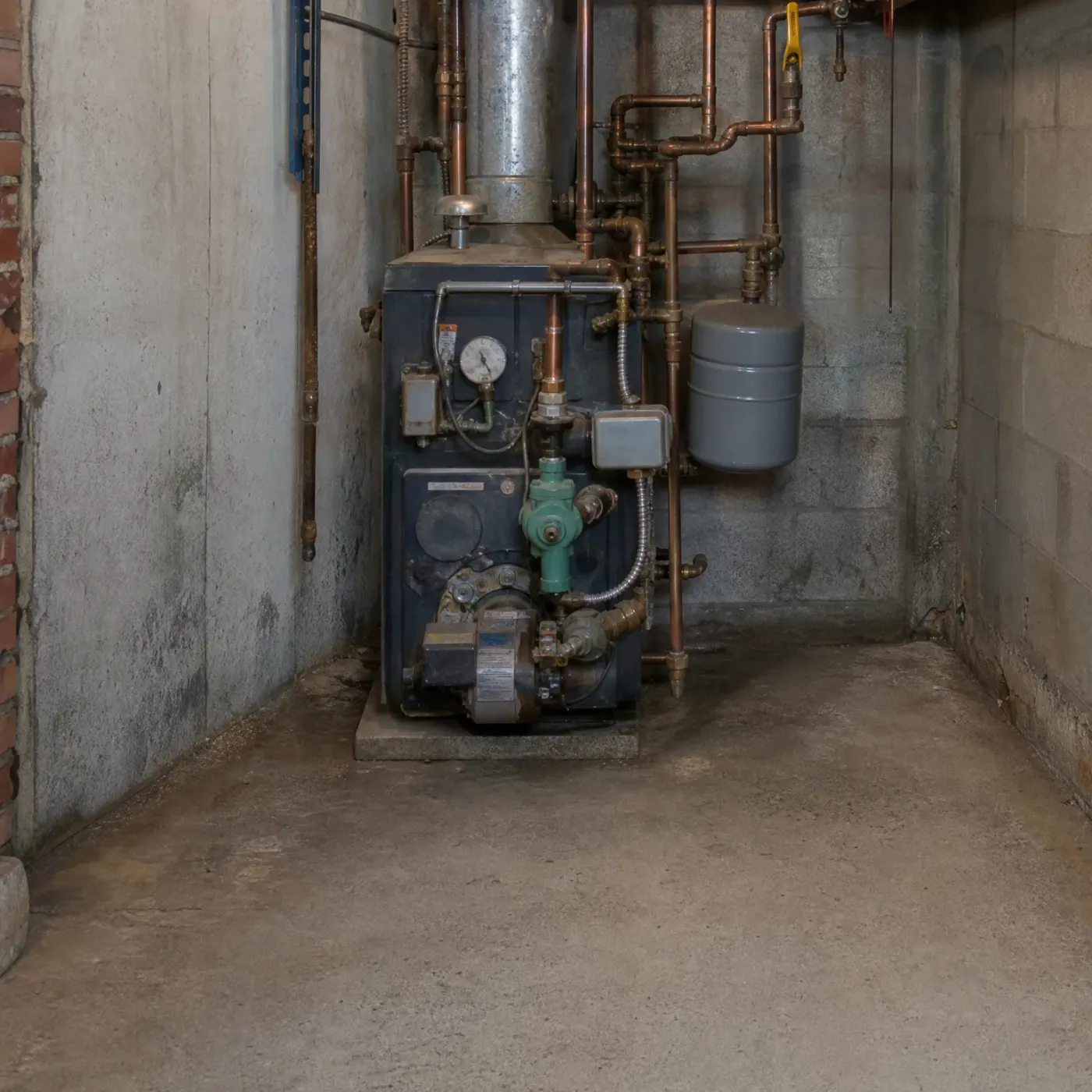
Follow the water back to its source before you assume the worst. Most of the time it leads to the discharge pipe running off the pressure relief valve near the top of the tank, which means the valve did its job and let pressure out rather than failed. That often traces back to an expansion tank that has lost its air cushion, so pressure builds until the valve has no choice but to open. A drip at a union or threaded fitting is a different problem, usually just a joint that needs resealing or tightening. Mineral deposits can also keep an older valve from closing fully once it has opened, so it keeps weeping even after pressure drops. The one that matters most is rust streaks or a slow weep low on the tank itself. That points to a crack in the tank, not a part that can be swapped out. Where on the tank the water shows up tells you which of these you're dealing with.
Where the water is actually coming from
- The pressure relief valve sits near the top of the tank and vents through a small discharge pipe down toward the floor.
- Water at the end of that discharge pipe almost always means the valve opened, not that the pipe itself is the problem.
- A fitting leak shows up as a drip or a stain at a union or threaded joint, usually where two pieces of pipe meet.
- An expansion tank that has lost its air charge lets system pressure climb until the relief valve has to open to compensate.
- Mineral buildup inside an aging valve can also stop it from sealing back shut once it has released pressure.
- A crack in the tank itself usually shows as rust streaks or a steady weep low on the tank body, not a sudden flood.


Get your boiler to the right pro
A boiler problem in Florida is not like a furnace problem up north. You will not find a repair tech down the street who services these every week, and most of the plumbers and HVAC companies in your area spend their time on heat pumps and AC units, not boiler tanks and pressure relief valves. That makes the search harder for you, not easier. You would have to call around asking who even works on boilers, explain what you're seeing, get told no or get put on a waiting list, then do it again with the next company. Meanwhile the water is still there, and so is whatever is causing it, a loose fitting, a valve doing its job, or something worse. Handing this off now means you stop being the one who has to find someone qualified. You explain it once, to one contractor who actually works on this equipment, and let them tell you what the water is actually from.
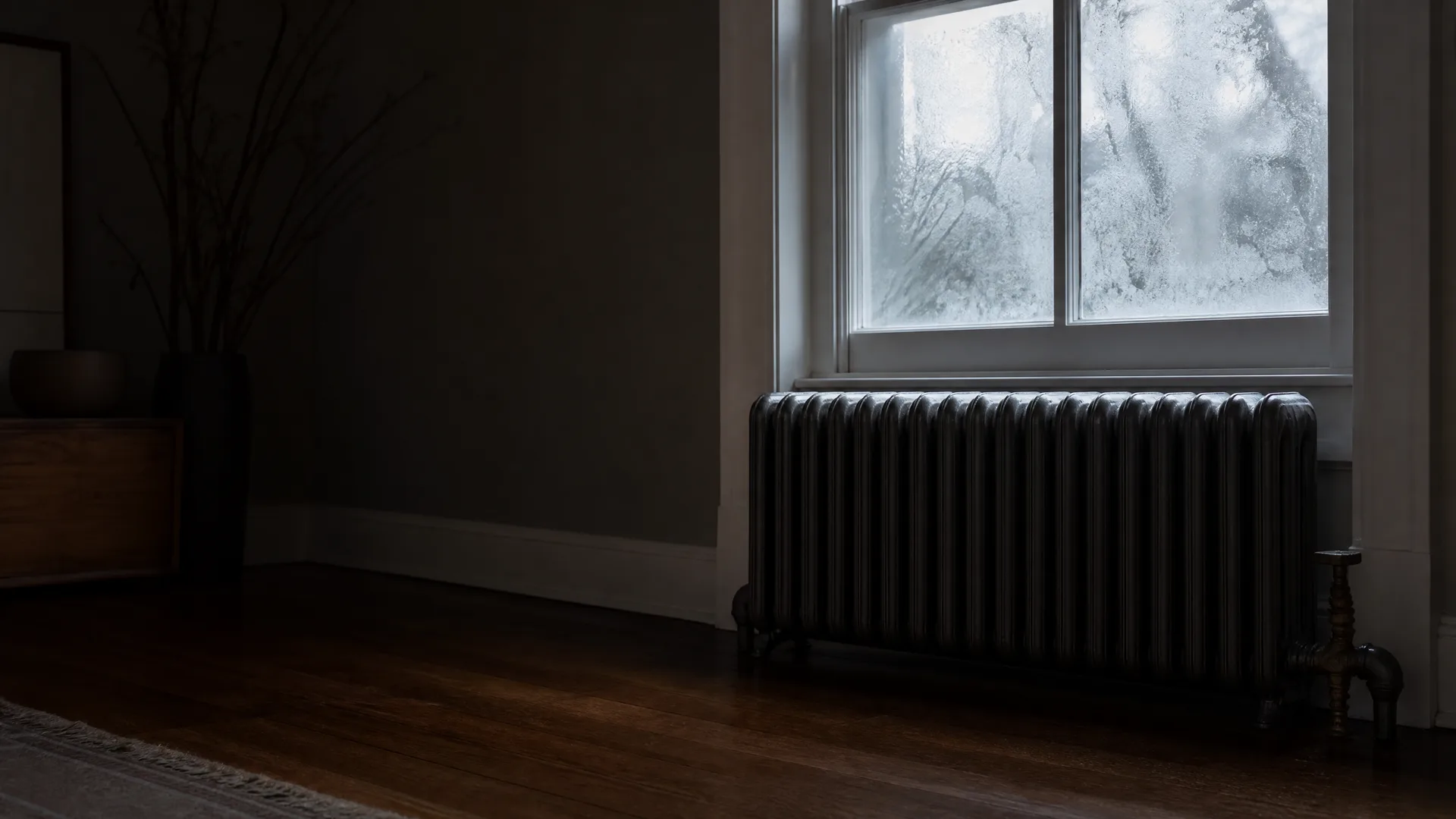
It is January, early, and the house is still quiet. You walk into the living room and feel it before you see it, a damp patch in the carpet by the radiator under the window. Ice has formed on the inside of the glass, a thin white film in the corners. You crouch down and run your hand along the base of the radiator, and it is wet there too, a slow bead tracking down the cast iron toward the floor. Outside, Florida is still dark. You straighten up and stand there a moment, looking at the water, trying to remember if it was there yesterday.
Keep It Running or Shut It Down
Keep running it
- A small drip at one fitting can often be tightened or repacked without draining the whole system.
- If the pressure relief valve is only venting now and then, it may just need cleaning or reseating rather than a full swap.
- Running it another week while you line up a tech won't make a minor fitting leak worse overnight.
- If the tank itself isn't the source, the rest of the system can usually keep heating while the leak gets sorted.
- Watching the pressure gauge daily tells you whether the leak is stable or getting worse, which matters for how soon it needs attention.
Shut it down now
- A crack in the tank itself won't seal back up, and running the boiler longer only pushes more water through it.
- A pressure relief valve that won't stop venting means pressure is still building somewhere, and that's not something to wait out.
- Water reaching electrical connections near the base of the unit turns a leak into a safety problem fast.
- A dropping pressure gauge alongside a leak means the system is losing water faster than it can hold, and it will eventually stop heating on its own.
- Because boiler techs are harder to find in Florida, shutting it down and getting the search started early beats waiting until the leak forces the issue.

Pressure inside the tank climbs past the valve's rated limit.
The pressure relief valve opens to vent the excess.
Water travels down the discharge pipe toward the floor.
A puddle forms below the pipe where it ends.




Winter nights average 52°F statewide
Winter nights here average 52°F, mild enough that your boiler cycles on for short stretches rather than running steady for hours. Those short bursts still build pressure the same way longer runs do, so a fitting or valve can start weeping even on a system that barely gets used.
NOAA nClimDiv 1991-2020 county normals weighted by homes

A leak like this has a cause you can find
A boiler leaking water in a Florida house is not a mystery that needs guessing. It traces back to a loose fitting, a valve doing its job, or a tank that has had enough. Each of those shows itself differently, and once you know where the water is coming from, you know roughly what you are dealing with.
What you don't have here is a boiler guy around the corner who deals with this twice a week. Finding someone who actually knows these systems, in a state full of heat pumps and AC units, usually means calling around and explaining the same leak over and over to people who don't service boilers at all. Getting matched with a contractor who works on these and having them reach out to you skips that part. The part where the house stays warm and dry still depends on the repair itself.

The right pro for this job
Skip searching for a boiler pro and answer a few questions instead.