Profile view of a bearded man wearing a black baseball cap and a dark gray T-shirt against a plain light background.

What your boiler pressure should be in Florida

Step 1 of 3: Equipment

What should my boiler pressure be?

A boiler that's losing pressure or won't hold steady can leave you guessing about whether something's actually wrong, especially if you've never had reason to check the gauge before. With most Florida homes relying on electric heat, a boiler here usually isn't running hard or often, so when you do glance at it, you want to know what number means it's fine and what number means it's time to call someone.

Most residential boilers should read between 12 and 15 psi when cold.

That range is what keeps water moving through the system without air getting pulled in, and it holds true no matter where the boiler sits or how often it runs. The gauge will climb a bit once the boiler heats up, that's normal, but at rest it should settle back near 12 to 15. A reading under 12 usually means the system has lost water somewhere, and a reading that keeps climbing past 15 or pushes toward 30 means the pressure relief valve is doing its job for a reason. Since boilers here tend to run light duty, a slow pressure drop can go unnoticed for a while if you're not checking it every so often.

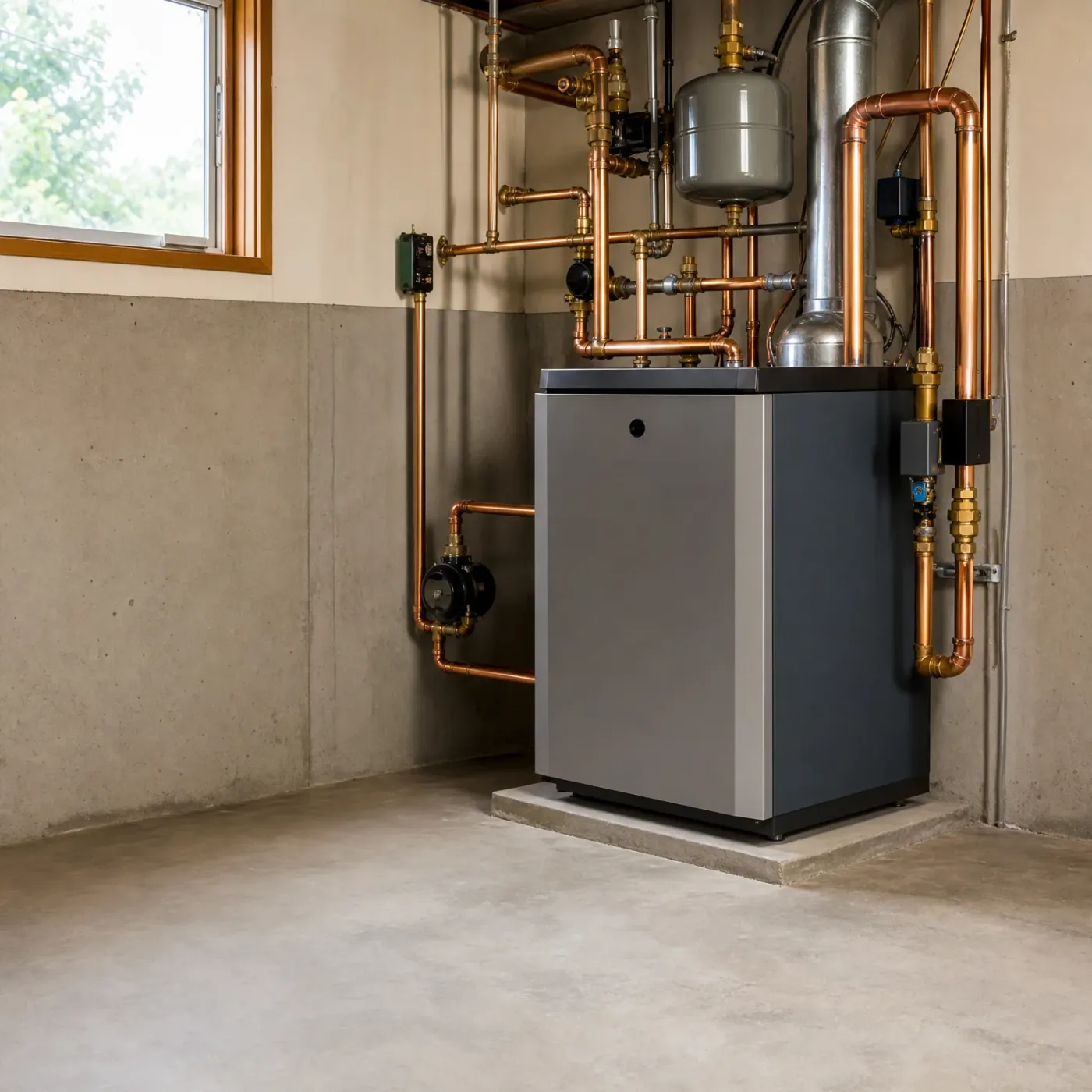
A gray floor-standing boiler on a concrete pad in a basement corner, connected to copper piping, brass valves, a circulator pump, an expansion tank, and a metal flue, with a window at upper left.

Pressure holding steady

The needle sits where it should and stays there whether the boiler just fired or has been idle for hours. Pipes and fittings are dry, the expansion tank is doing its job, and the system is quietly keeping your water heated without asking for attention.
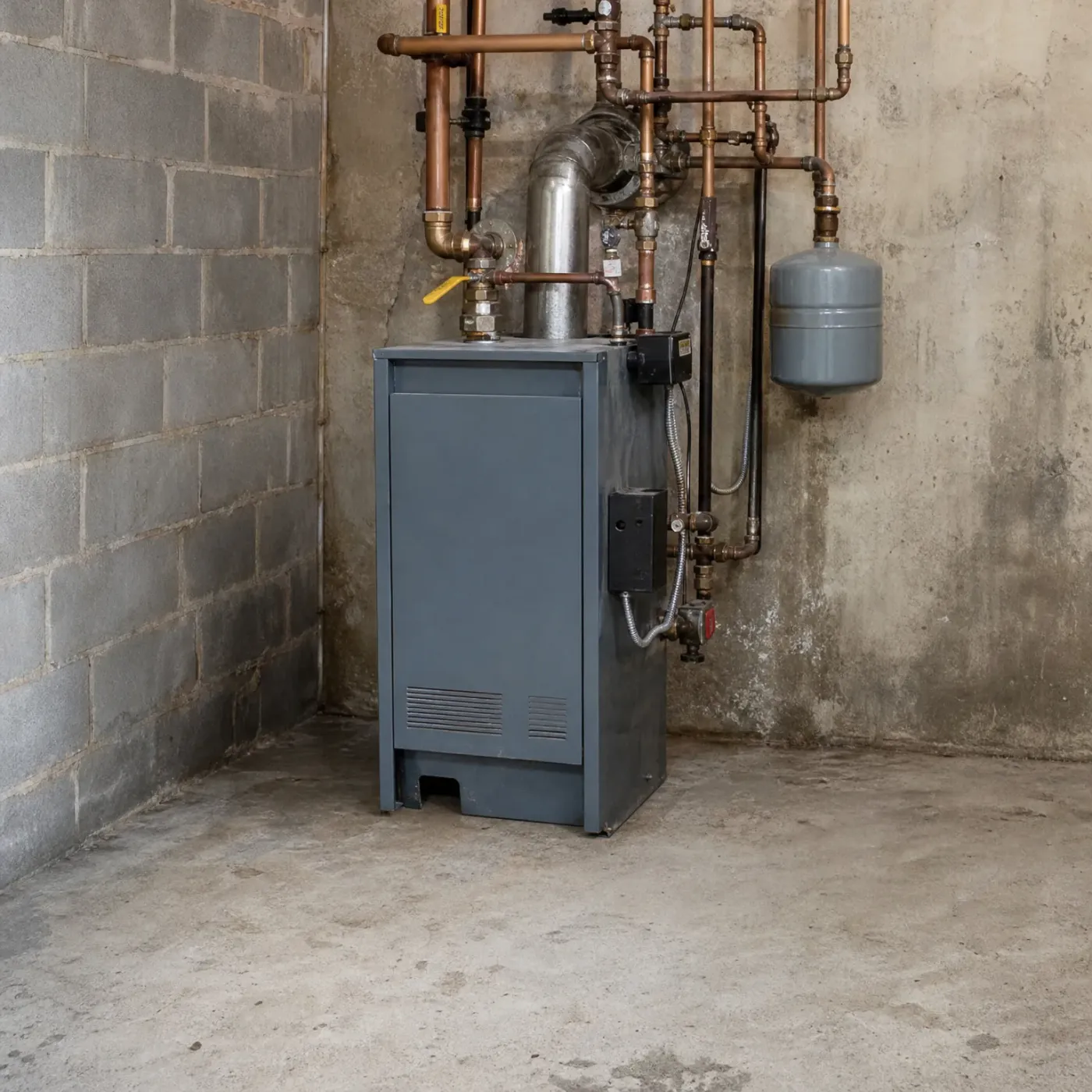
A gray floor-standing boiler in a basement corner with copper and black piping above it, a flue vent, and a gray expansion tank mounted on the concrete wall beside a concrete block wall.

Pressure that won't behave

The gauge drifts low between cycles, or climbs past where it belongs, and you find yourself checking it more than you'd like. That pattern usually points to a leak somewhere in the piping or an expansion tank that's no longer holding air the way it should.

Why does my boiler pressure keep dropping?

You'll catch it on the gauge first, the needle sitting below where it should be, or you'll notice the boiler short cycling or struggling to heat water the way it used to. Sometimes there's a hiss near a fitting, or a damp spot on the floor near the unit where water's escaping slowly enough that you haven't traced it yet. A system that keeps losing pressure is losing water somewhere, and whatever is letting it out won't fix itself. Left alone, it can mean the boiler working harder than it needs to, or shutting itself off as a safety measure when pressure drops too far, leaving you without hot water until someone sorts out where it's going.

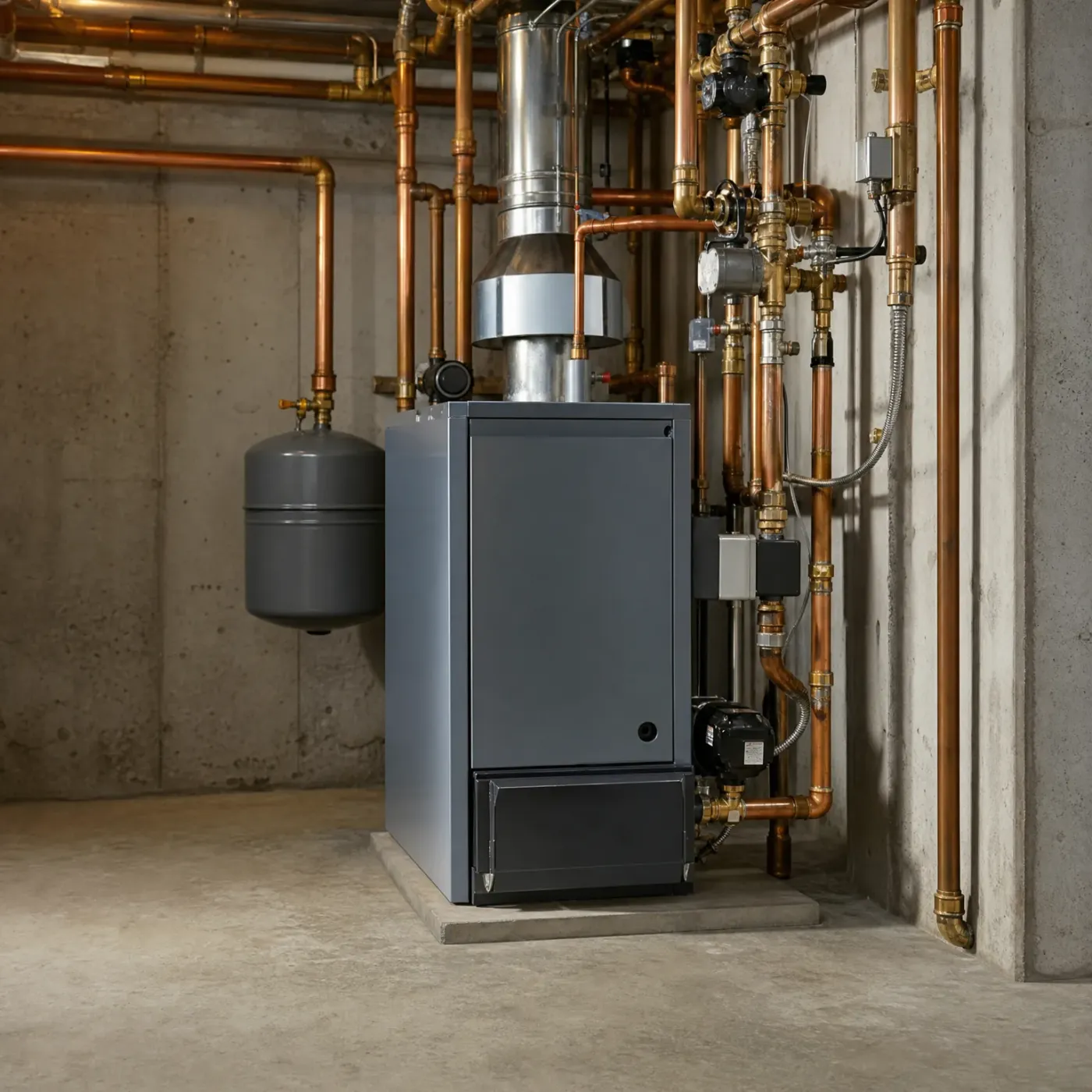
A gray boiler on a concrete pad in a basement, connected to copper piping, valves, circulator pumps, a metal flue, and a wall-mounted expansion tank.

Normal, holding steady

The pipes and fittings are dry, the expansion tank sits where it should, and the pumps run without strain. You could check the gauge after the boiler's been running all evening or first thing in the morning and find the same reading both times.

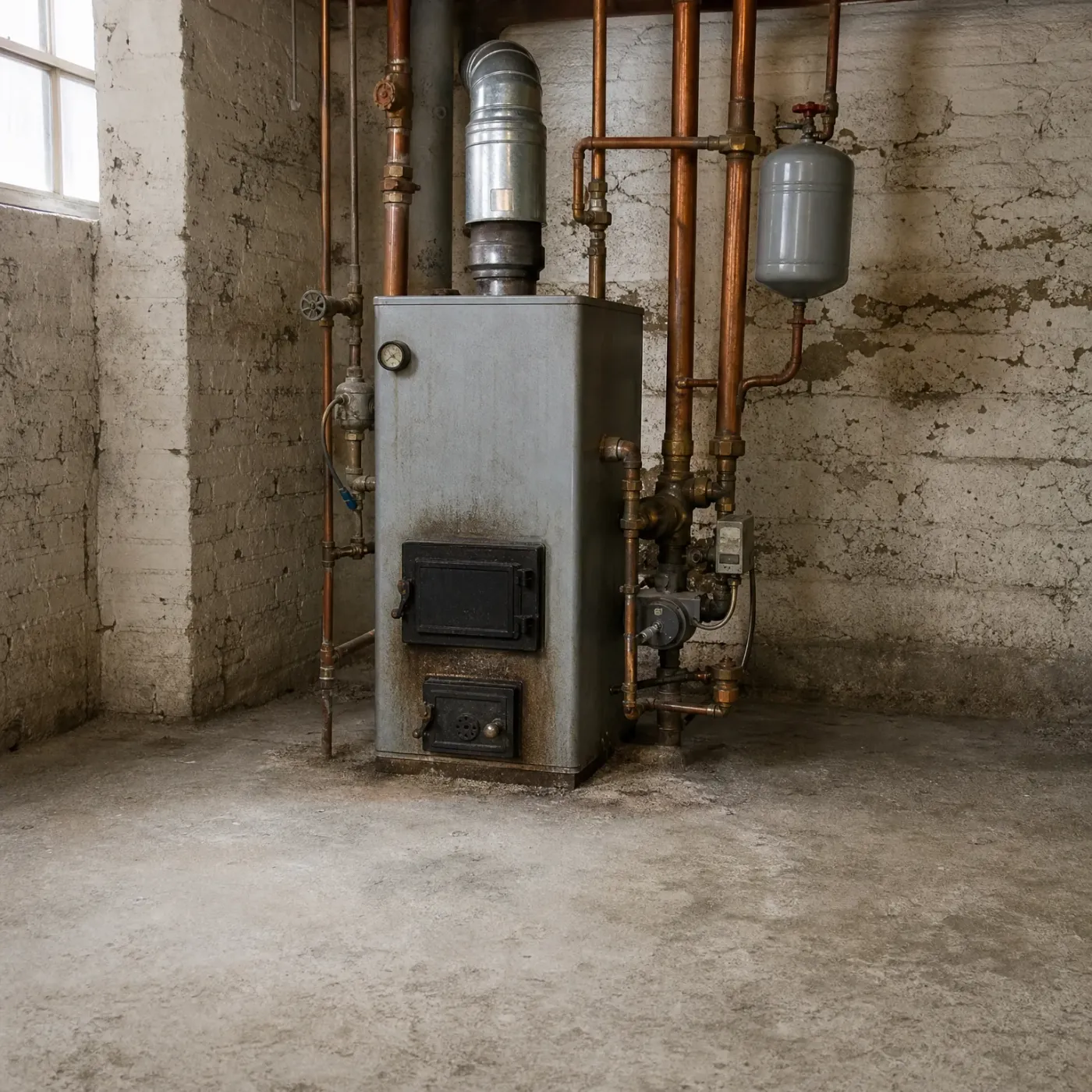
An old gray boiler with copper piping, a flue duct, pressure gauge and an expansion tank stands in the corner of a basement with painted masonry walls and a bare concrete floor.

Losing pressure

The gauge reads low and the boiler may be cutting on and off more than it used to. Look along the copper pipes and around the valves for damp spots or a crust of mineral buildup, a sign water is escaping somewhere in that network even if you never see it pool.

A smiling man in a denim shirt and white t-shirt stands in an open dark doorway of a stucco house, facing a woman with long brown hair and a green jacket seen from behind in the foreground.

What's actually happening inside the gauge

The pressure you're reading is water pushing back against the pipes and the expansion tank, not air. When the boiler fires, that water heats up and expands, and the expansion tank gives it somewhere to go so the pressure doesn't spike. A bladder or diaphragm inside the tank separates the water side from an air cushion, and that cushion is what absorbs the swing. If the tank's bladder has failed or the air charge is gone, the system has nowhere to put that expansion, and you'll see the needle climb when the boiler's running and drop back once it cools. That rise and fall between a cold reading and a hot one is normal within a narrow range. What isn't normal is a needle that keeps trending down over days or weeks, because that points to water leaving the system somewhere instead of just moving around inside it.

A contractor checking this out isn't just glancing at one number. They're watching how the pressure behaves cold versus hot, checking the expansion tank's air charge with a gauge made for it, and tracing the near-boiler piping for the drip or stain that gives away a slow leak. That's the kind of look a gauge reading alone won't give you, and it's the difference between topping off the system and actually knowing why it needed topping off. Getting matched with someone who handles this regularly means that judgment call isn't left to you.

A living room corner with a light beige sofa holding a textured taupe cushion, a large ceramic vase of olive branches by a window, a framed neutral artwork on the wall, and a dark bowl with stacked books in the foreground.
  1. Cold fill brings the system to around 12 to 15 psi.

  2. Firing the boiler heats the water and raises pressure.

  3. The expansion tank absorbs that rise and keeps the needle steady.

  4. Pressure settles back down once the water cools between cycles.

A woman wrapped in a thick beige fleece blanket sits on a sofa with an open book on her lap, beside a lit table lamp, with a frost-covered window behind her.
An older woman with gray hair in a bun and glasses, wearing a beige knit sweater, smiles while looking to the side in a warmly lit kitchen, with a loaf of bread on the counter in the foreground and a snowy scene outside the window.

Matched to your boiler job

Send the form, and lining up the boiler tune-up stops being yours to chase.

You're not committing to anything by asking.

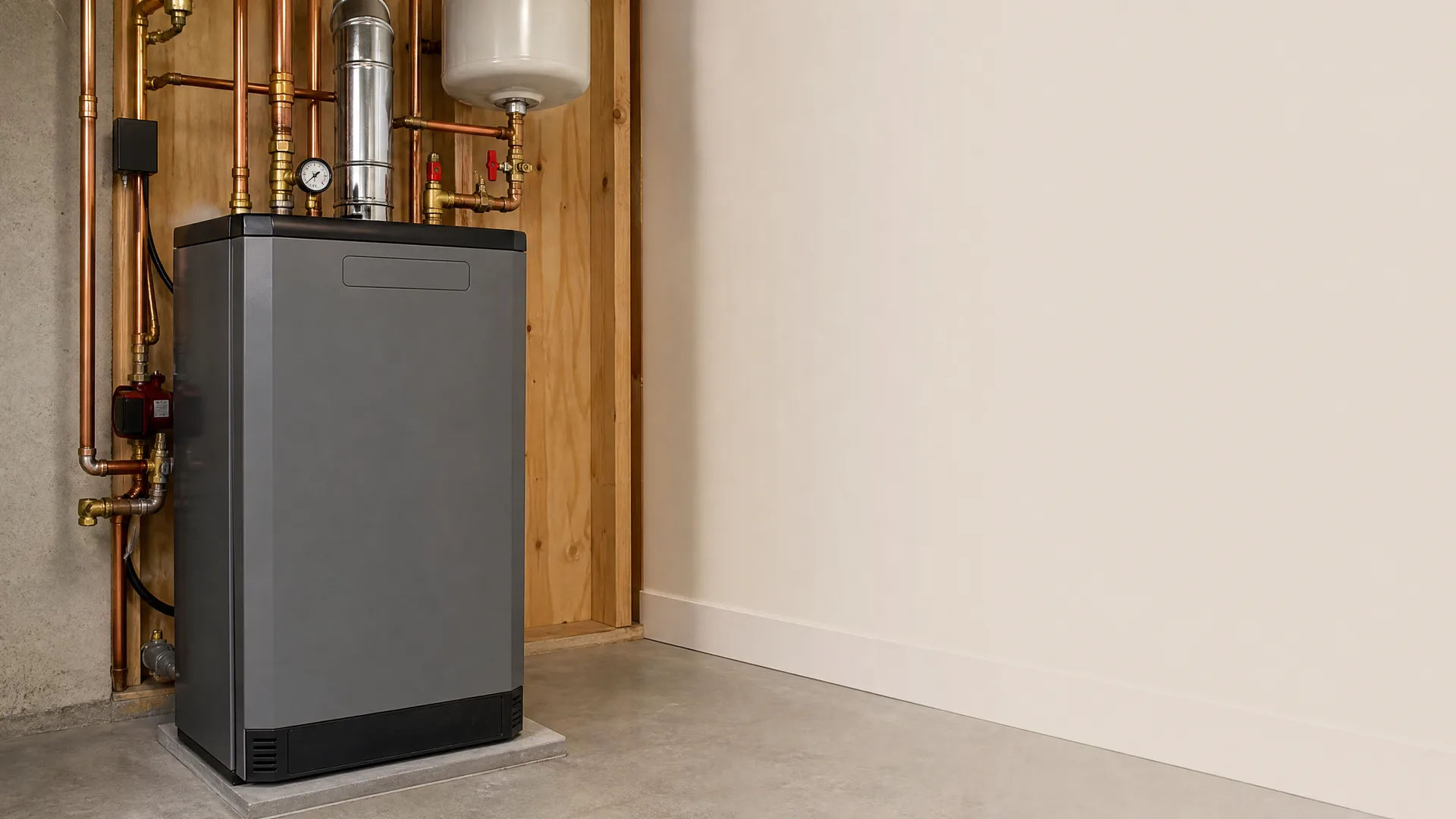
A dark grey floor-standing boiler on a concrete floor in front of a plywood wall, with copper pipes, valves, a pressure gauge, a flue pipe and a white expansion tank above it, beside a plain light-coloured wall.

The gauge has three zones

Most boiler gauges mark a low range, a normal range, and a high range right on the dial, usually in different colors. Normal is typically 12 to 15 psi when the system is cold, and it climbs some once the boiler fires and the water heats up. If the needle sits in the red on either end, cold or hot, that's the gauge telling you something's off before you notice it any other way.

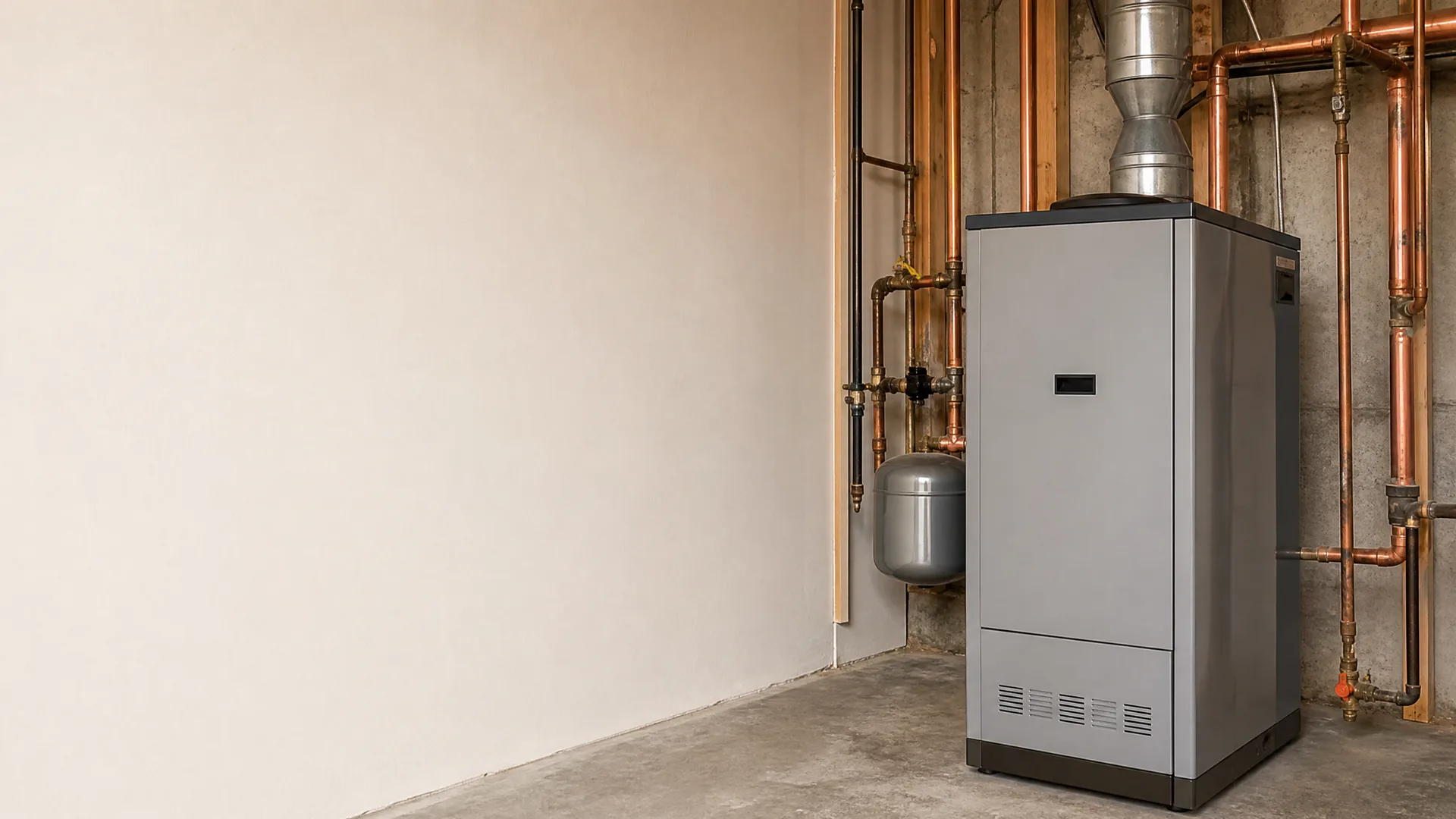
A gray boiler unit with a metal flue pipe stands in a basement corner, surrounded by copper piping and an expansion tank against a plain light wall and concrete floor.

Relief valves open for a reason

A boiler also has a pressure relief valve set to open around 30 psi, well above where the system should ever run day to day. That valve isn't decoration. If pressure climbs high enough to trip it, water discharges through a pipe near the floor, and you'll see or hear it happen. Finding that pipe wet is a sign pressure got too high, not a separate problem on its own, and it points back to whatever pushed the needle past normal in the first place.

Checking It Cold vs. Hot

Checking it cold

  • The gauge reading only tells you something if you know the state of the system when you read it.
  • Right after the boiler has been running, pressure reads higher because the water is still expanded from heat.
  • A cold reading before the first fire of the day gives you the number to compare against 12 to 15 psi.
  • If you check mid-cycle and see 18 psi, that's not necessarily a problem, it may just mean the water's still hot.
  • Writing down a cold reading once gives you a baseline to notice drift over weeks, not just a single snapshot.

Checking it hot

  • A reading taken while the boiler's actively firing shows you the top end of its normal swing, not a problem.
  • If the needle climbs past the high zone marked on the gauge while running, that's worth noting even if it drops back later.
  • Hot readings that keep creeping higher cycle after cycle can point to an expansion tank that's no longer absorbing the rise.
  • Comparing a hot reading to a cold one from the same day tells you how much the system is swinging, which matters more than either number alone.
  • A hot reading that matches yesterday's hot reading, and a cold one that matches yesterday's cold one, means the system's behaving the same as it was.
A gray-haired bearded man in a dark coat and scarf dusted with snow stands smiling in a dimly lit entryway with a white front door, a side table with a lit lamp, an oval mirror, and a patterned rug.
An older bearded man in a dark snow-dusted coat and gray scarf stands just inside a dimly lit home entry, with a framed picture, lit table lamp, and an adjoining room with a fireplace behind him, and snow visible through the open door.
A gray-haired, bearded man in a dark snow-dusted coat stands smiling in a dimly lit entry hall with a staircase, a lit table lamp, a framed picture, and a living room visible through a doorway.
An older man with gray hair and a beard, wearing a dark jacket dusted with snow, stands smiling in a dimly lit hallway with lamps and a living room visible behind him.
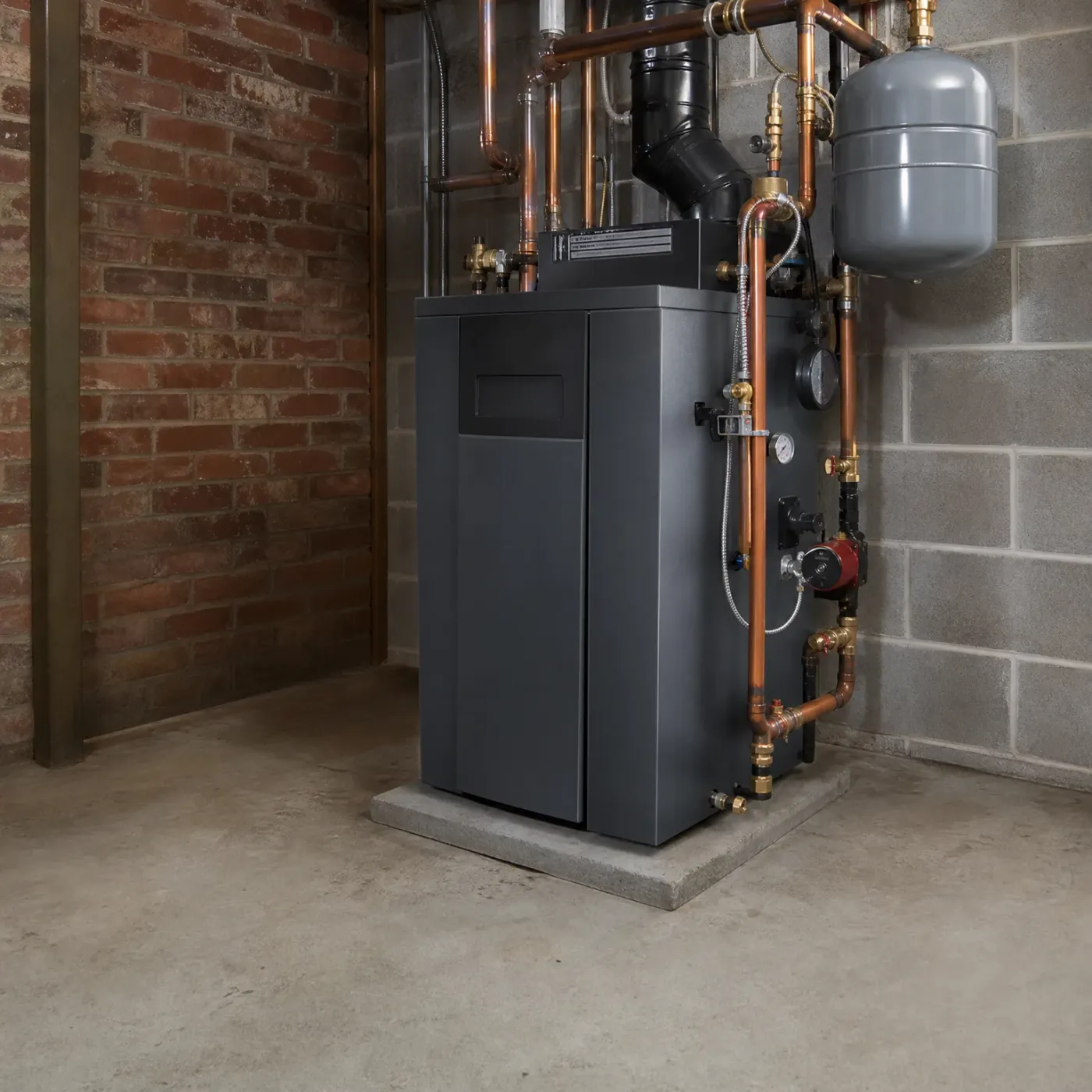
A dark gray floor-standing boiler on a concrete pad in a basement, connected to copper piping, valves, a circulator pump, a gauge, a black flue pipe, and a gray expansion tank, with a brick wall on the left and concrete block wall behind.
Copper lines run tight to the valves and gauges, and the needle holds its number whether the boiler just shut off or sat idle overnight.
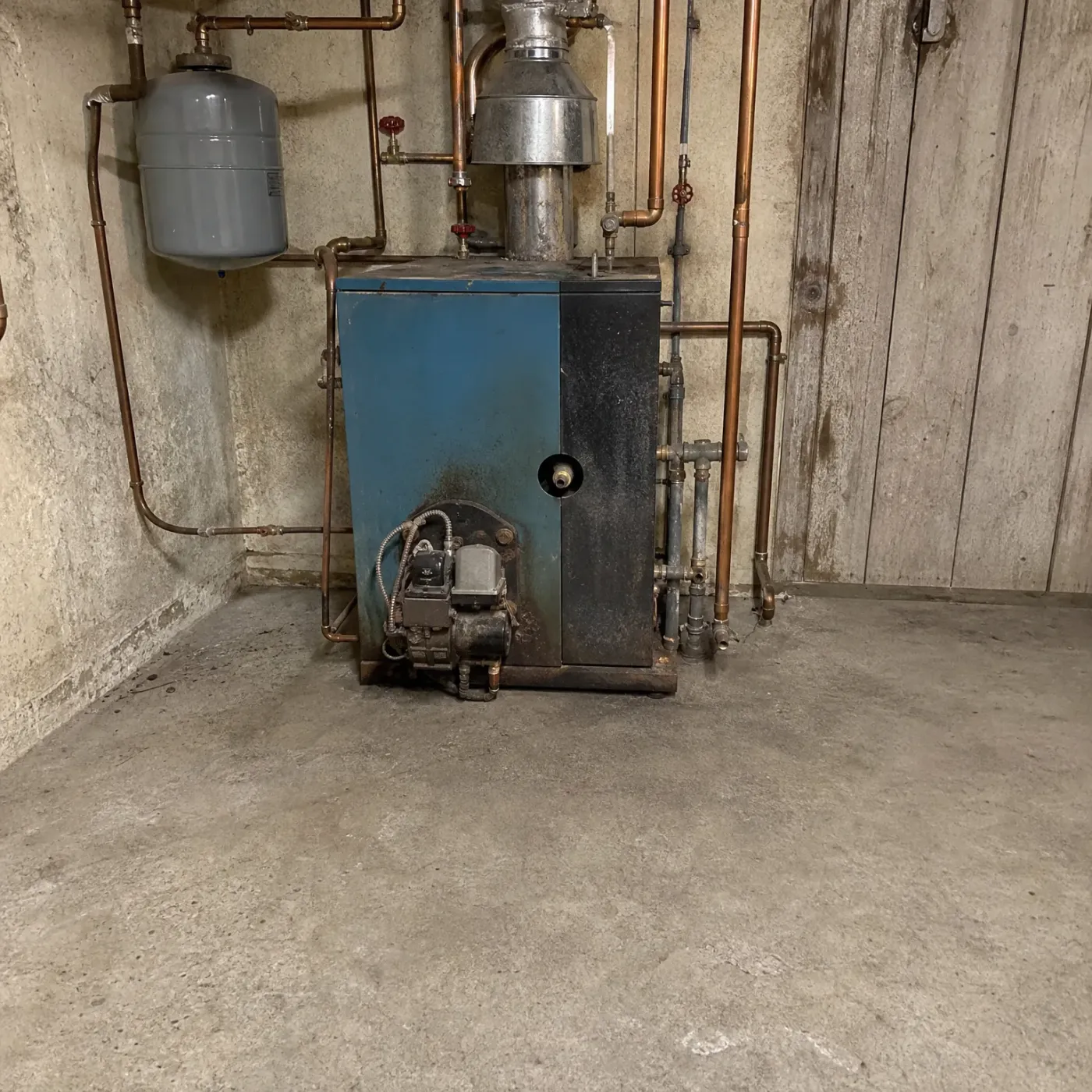
A blue and black boiler with a burner unit, flue, expansion tank and copper and steel piping stands on a concrete basement floor against a concrete wall and wooden plank partition.
An old boiler crowded into the corner with no room to check a fitting is easy to let slide until the pressure says otherwise.

Winter nights average 52°F statewide

A 52°F night doesn't ask much of a boiler, since the water only has to climb so far to heat your home. That's easier on the pressure than a hard freeze would be, but the gauge still needs a look now and then to catch a slow drop before it becomes a cold night with no heat.

NOAA nClimDiv 1991-2020 county normals weighted by homes

A boiler that holds 12 to 15 psi cold and climbs some once it fires is doing what it should. One that keeps sliding below that, or won't stop creeping past it, is telling you something needs a look, whether that's a fitting letting go a little at a time or an expansion tank that's lost its give. You don't have to figure out which from where you're standing. Once you send the form, someone qualified to read that gauge and check those fittings takes it from there, and the job of tracking down the cause is theirs, not yours. That's one less thing to keep watching through a Florida winter that doesn't ask much of the system most nights but still deserves a boiler that holds its number. Checked and steady is the standard. Dropping or climbing on its own is the sign to hand it off.

A wooden front door with six small glass panes and a narrow sidelight, set in a shingled house entry with white trim, reached by stone steps flanked by a planted urn with purple flowers and leafy branches in the foreground.
Exterior corner of a house with beige horizontal lap siding and a black-framed window, with white hydrangeas, ornamental grasses and low plantings along a flagstone patio.
Corner of a house with tan lap siding and a window, a brick step edge, flowering white hydrangeas and green shrubs beside a flagstone walkway leading to a white picket fence and a tree in backlit sunlight.
House exterior with cream horizontal lap siding, a dark-framed window, a black wall lantern beside a wood door, potted shrubs on stone steps, and white and pink hydrangeas in the foreground garden.
Corner of a cream lap-sided house with a white-framed window and dark shingled roof, beside a white-flowering hydrangea shrub, a clipped hedge, mulched bed and lawn.

A boiler pro near you

Send the form and the boiler tune-up stops being something to remember.

Get my match

It costs nothing to send, and you don't have to hire anyone.