

Repair or replace an old boiler in Florida

Describe your boiler job, and a local pro who handles it gets in touch.

Get matched

A boiler that is old and struggling usually gets repaired once or twice more before it makes sense to replace it, and the deciding factor is what's actually failing. A cracked heat exchanger, a leaking section, or a control board that keeps failing means the boiler is done, because those repairs cost close to a new unit without buying you the years a new one would. A bad circulator pump, a faulty valve, or an igniter problem is usually worth fixing on a boiler that's otherwise sound. Boilers are rare in Florida since most homes here heat with electricity, so if yours still runs on one, parts and service can take longer to line up than they would somewhere boilers are the norm. That's worth weighing if yours is starting to need attention every season instead of running quiet for years at a stretch.

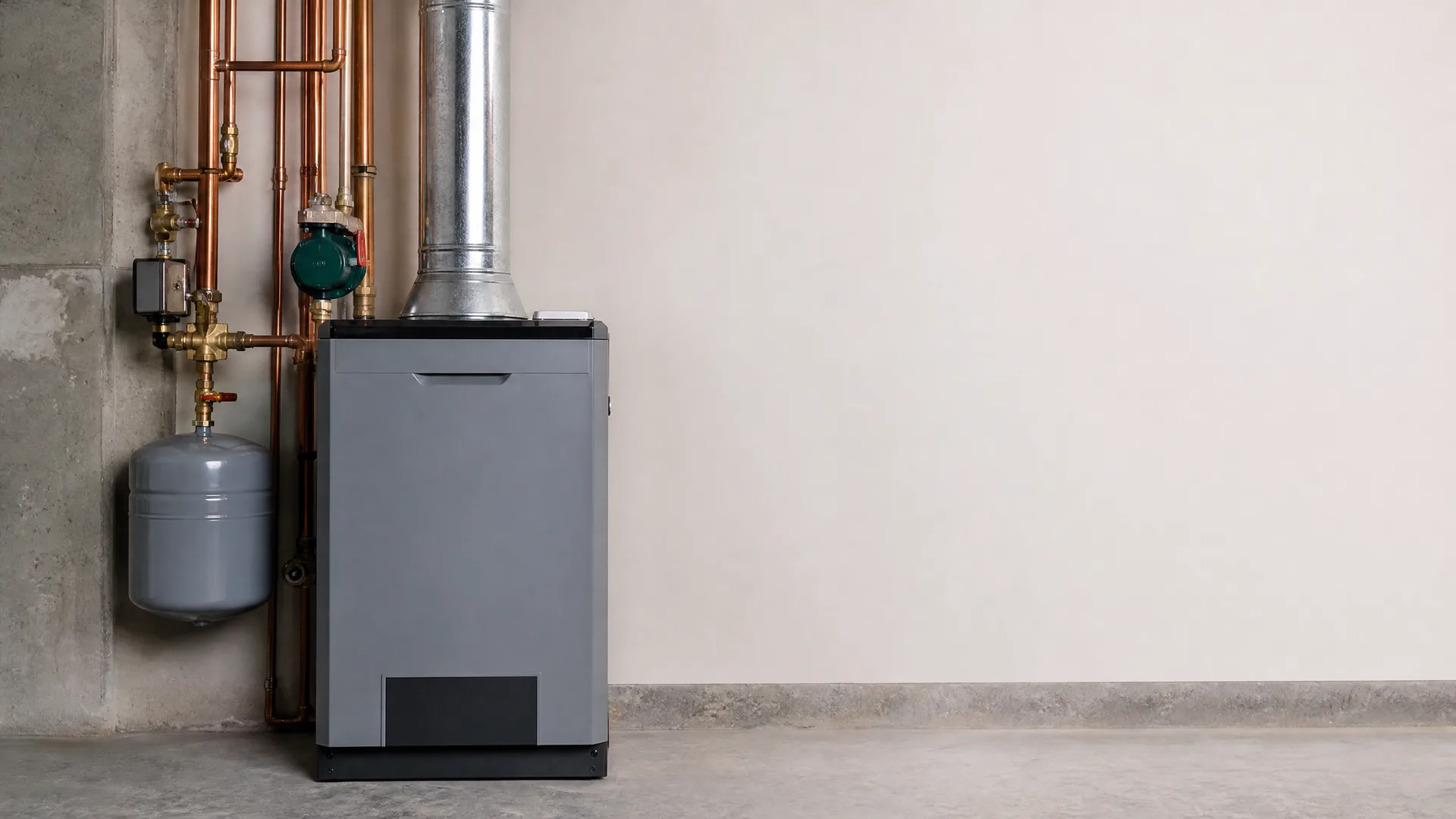
A gray floor-standing boiler with a metal flue pipe, copper piping, a circulator pump and a gray expansion tank, installed against a concrete wall.

Why boilers are less common here

Most homes in Florida heat with electricity, so a boiler here is often tied to an older heating system that came with the house or was added later for a specific reason. Parts for it may need to be special ordered, and a local contractor who still services boilers regularly will know faster than a general technician whether the part that failed is something still made or something that has to be sourced.

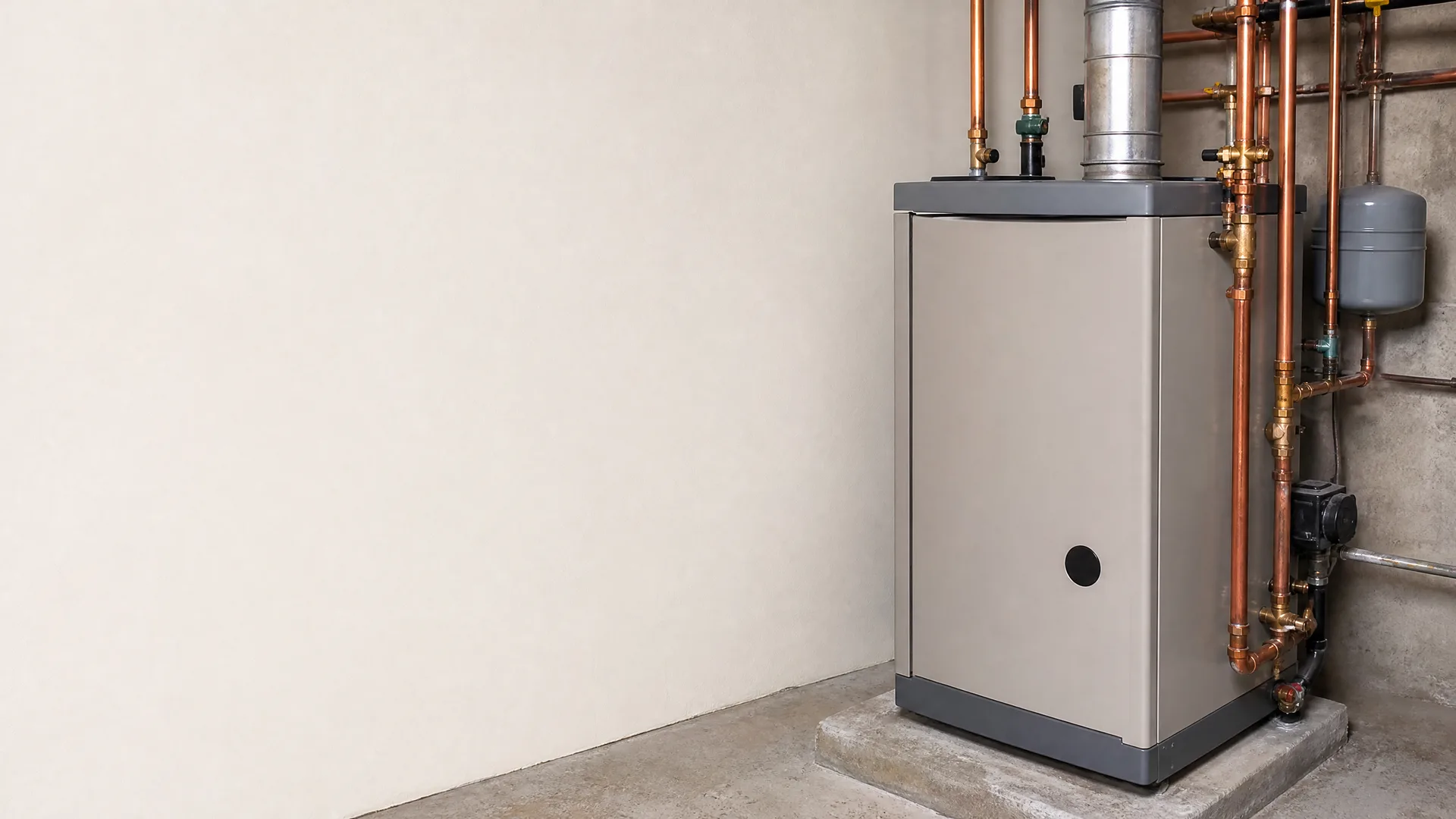
A tall grey floor-standing boiler on a concrete plinth in a corner of a room, with copper pipework, a flue, a circulator pump and an expansion vessel to its right, beside a plain cream wall.

What a leaking section tells you

A boiler's sections hold the water that carries heat through the system. Once one of them cracks or starts leaking, it does not seal itself back up, and the leak will not stay the same size. A contractor can sometimes isolate a single section for a while, but that is a stopgap, not a fix, and it buys you a season at most before the next section goes.

Is your boiler telling you something is wrong

A boiler that's struggling usually announces itself. You might hear banging or kettling in the pipes, see water pooling near the base, or notice a room that used to heat fine taking longer to warm up. An older unit may short cycle, kicking on and off more than it should. A rising gas or electric bill with no other explanation often means the boiler is working harder to do the same job. If you smell something metallic or see rust at a fitting, that's the system telling you a leak has started. Left alone, a small leak or a failing control can turn into water damage or a boiler that quits on a cold night with no warning.

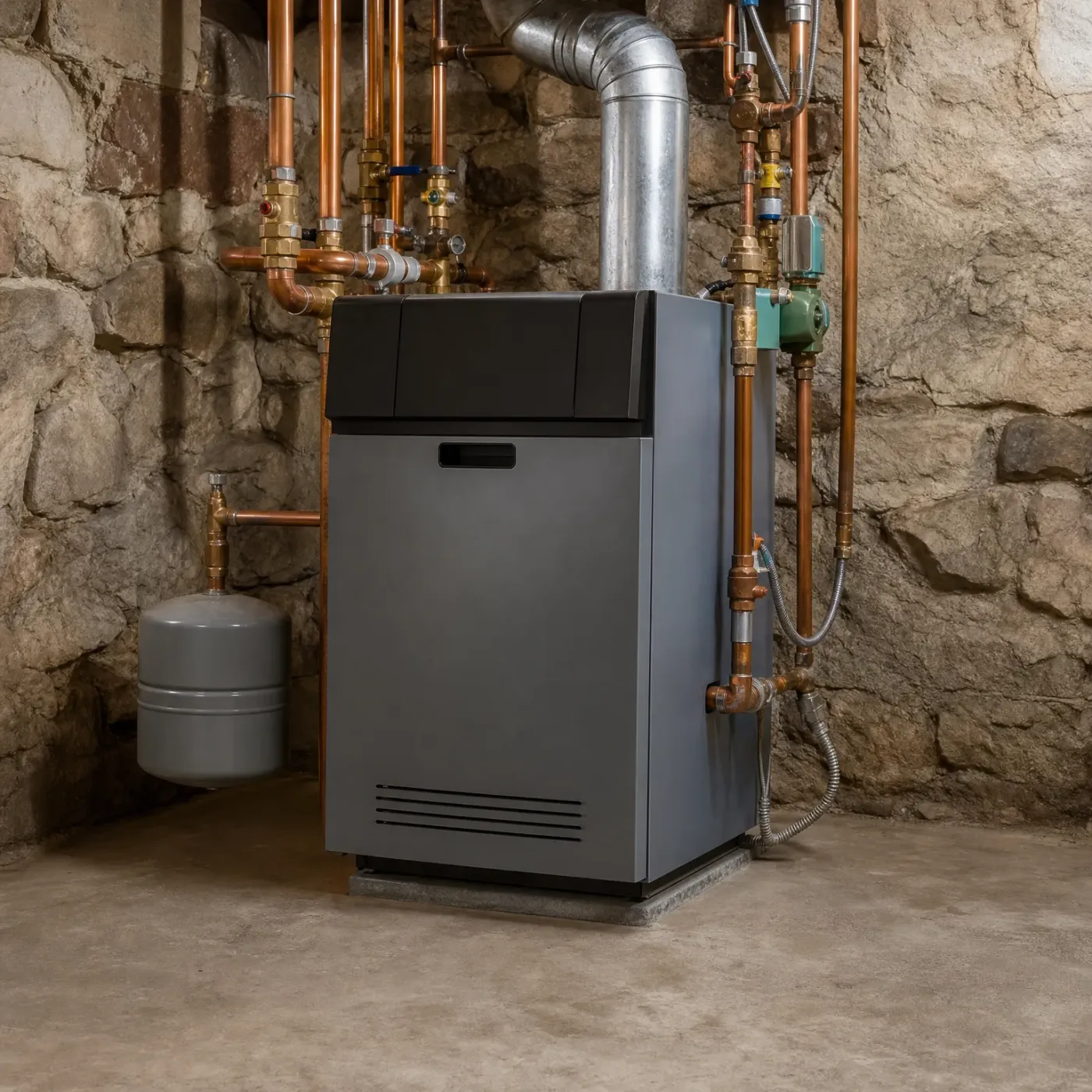
A gray residential boiler on a concrete pad in a basement with stone walls, connected to copper piping, brass valves, a circulator pump, an expansion tank, and a metal flue duct.

Running the way it should

A boiler like this holds steady. The pump moves water through the pipes without strain, the valves hold pressure, and the expansion tank keeps the system balanced. No rust at the fittings, no water on the pad, no rooms slow to warm up.
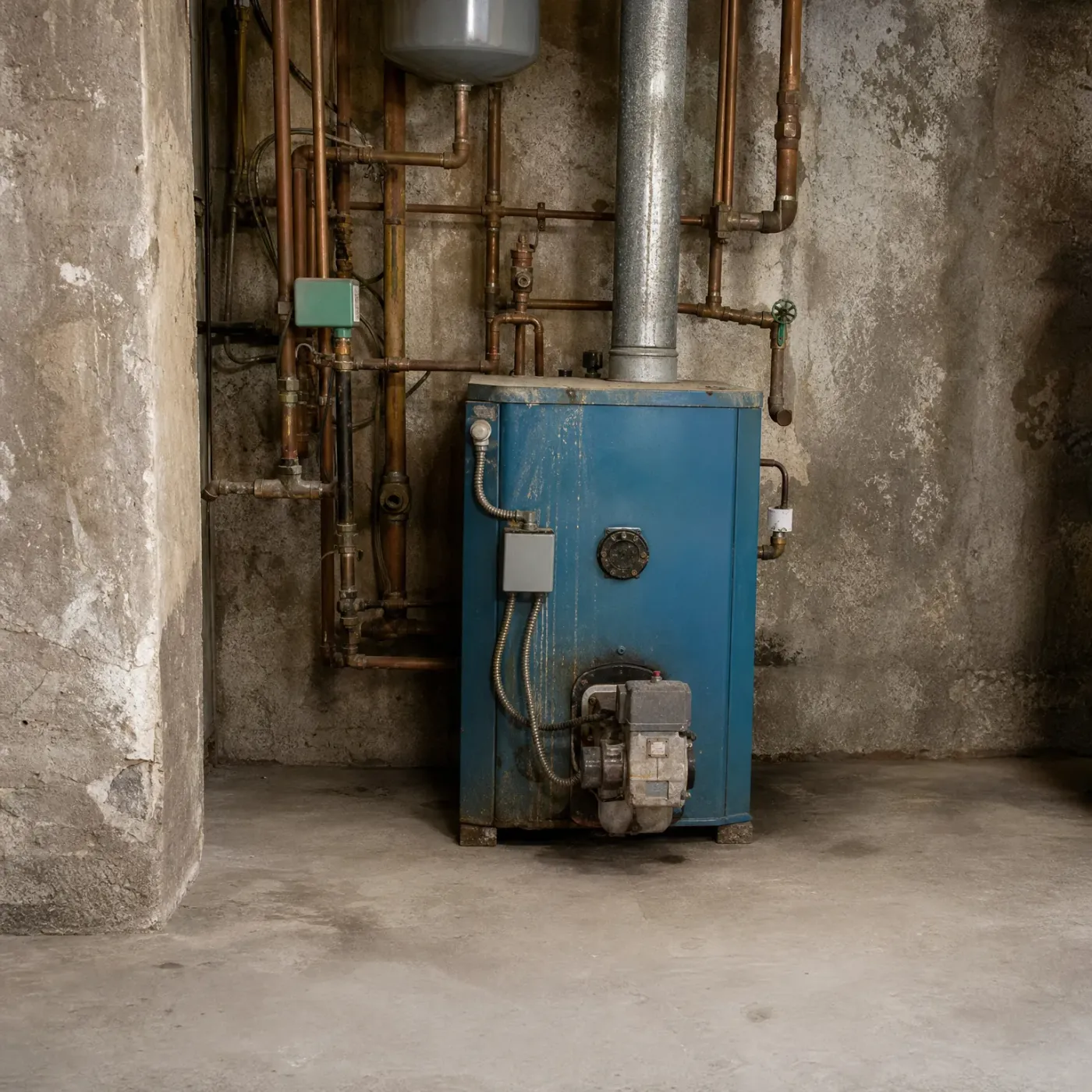

A blue cabinet boiler with a metal flue pipe and copper piping stands against a bare concrete wall in a basement with a concrete floor.

A boiler on its way out

This one is old enough that the wear shows on the outside too, not just the heat. A flue pipe this size and a burner this worn point to a system working harder than it used to. Once the burner assembly or flue starts going, repairs tend to catch up with each other fast.

A man seen from behind raises his hand to wave at a woman standing in the open front doorway of a single-story house with gray shingle siding, white columns and a gabled porch entry.

What happens when a boiler short cycles

A boiler that fires, runs for a minute, and shuts off, then starts again a few minutes later is short cycling. Usually it comes down to the aquastat, the control that tells the burner when the water's hot enough to stop and cold enough to start again. If it's reading wrong, the boiler shuts off before the water actually reaches temperature, or it waits too long and overshoots. Low water pressure does the same thing, since the pressure switch won't let the burner run if it senses the system can't circulate safely. Either way the burner is working harder for less heat, and that shows up on the gas or oil bill before anything else does.

Because boilers aren't common here, a part like an aquastat or a pressure switch isn't always sitting on a shelf at the nearest supply house. A contractor who services boilers regularly in Florida knows which parts to keep on hand and which ones take a few days to come in, and that's the kind of thing worth knowing before the repair starts, not after. Once you're matched with someone local who works on this equipment, they can tell you straight off what's likely failing and what it'll take to get parts.

A gray upholstered sofa with a textured cushion sits beside a dark round side table holding a vase of green foliage, with a table lamp and sheer-curtained window behind.
A woman with long gray hair wrapped in a checked blanket sits on a sofa by a window with yellow autumn foliage outside, with a lamp, framed picture and plant in the background.
An older woman in a cream knit sweater sits on a sofa by a window, looking out at sunlit trees with yellow and orange autumn leaves, with a bookshelf and lamp behind her.
A woman with gray shoulder-length hair in a dark knit sweater sits on a cushioned seat by a window, looking out at yellow autumn foliage, with a living room, armchair, houseplant and framed picture behind her.
An older woman with gray hair in a bun, wearing a cream knit sweater, sits on a sofa with a gray blanket and looks out a large window toward yellow-green autumn trees, with a lit table lamp and dark armchair behind her.

A local pro for your boiler installation

One installer gets your project, so there's no bidding war over it.

It costs nothing to send, and you don't have to hire anyone.

Repairing it one more time

If the boiler is firing fine and the problem is a part like a circulator pump, a zone valve, or an aquastat, repair is usually the right call. Those parts can be replaced without touching the rest of the system. A boiler that came with the house and has been otherwise reliable is worth keeping running this way, especially since parts for it may take longer to source here than they would somewhere boilers are common. A local contractor who still works on these can tell you if what's failing now is a one-time fix or the start of something bigger.

Replacing it instead

Once the heat exchanger or a section of the boiler itself is cracked or leaking, repair stops being the cheaper option long term, because that's the core of the unit, not a part bolted to it. If you're replacing an aquastat or circulator every year or two, that pattern usually means the boiler is wearing out broadly, not failing in one spot. A new boiler also gives you a chance to right-size the system if the old one was oversized or undersized for how the house actually heats.

Winter nights average 52°F statewide

A 52°F night here isn't hard on a boiler the way a northern winter is. It still needs to hold steady for those few hours before sunrise, and a system with a failing part won't recover as fast as one that's running right.

NOAA nClimDiv 1991-2020 county normals weighted by homes

Repair or Replace: What Decides It

  • A boiler that's leaking, cracked, or wearing out a control board for the second or third time is usually past the point of repair.
  • A single bad part like a circulator pump, zone valve, or aquastat is a repair, not a reason to replace the whole system.
  • Because boilers are less common in Florida, parts can take longer to source and a local contractor who services them regularly matters more here.
  • Short cycling, kettling, or a room that's slow to heat are signs worth checking before a cold night finds the weak part first.
  • A boiler running right holds steady pressure and even heat with no rust or water at the fittings.
  • The right call depends on what's actually failing, not on the age of the unit alone.

The question isn't how old the boiler is. It's what part failed and what that failure tells you about the rest of the system. A circulator pump, a zone valve, an aquastat, these go bad on their own and get swapped out without touching anything else. The boiler keeps running the way it has for years. A cracked heat exchanger or a leaking section is a different problem. That's the system itself giving out, and a control board that keeps failing even after it's been replaced is usually a sign of something upstream causing the failures, not a one-time fault.

Short cycling is worth paying attention to before you're deciding anything. A boiler that fires, shuts off after a minute, then fires again a few minutes later is working harder than it should, and usually the aquastat is the first thing to check. Kettling, banging pipes, water at the base, a room that's slower to heat than it used to be, these are the boiler telling you something before it fails outright. Catching it there is what keeps a repair a repair.

Because boilers aren't the common setup in Florida, finding someone who actually services them regularly, and parts that fit, matters more here than it would somewhere a boiler is the standard system. A contractor who sees this equipment every season knows what tends to fail first and what a repair here actually involves.

A woman in a cream knit sweater sits in an armchair with her eyes closed and a slight smile, beside an open window showing orange autumn foliage, with a mug, books and a lit candle on a small side table.
An older man with gray hair and a beard leans back on a beige sofa with his eyes closed, in a sunlit room with potted plants, a wicker chair and large windows behind him.

Boiler Installation

Get the right pro for your boiler

Only one pro gets your request, so you hear from one company.

A black-framed smartphone standing upright against a plain white background, its screen filled with solid green.
Step 1 of 3: Equipment