Your request goes to a Broward County pro who takes boiler jobs.
Boilers are not common in Fort Lauderdale. Most homes in Broward County heat with electricity, so if you have a boiler, it's probably an older system that came with the house, or one installed for a specific reason like radiant heat. Either way, knowing how long it's good for isn't something you can look up on a chart, because the answer depends on how yours was installed, what it's made of, and how it's been maintained.
That's the trouble with searching for a number. A boiler can run twenty years or it can run forty, and the difference usually comes down to things you can't see from the outside: the condition of the heat exchanger, whether the system has been serviced regularly, whether it was sized right for your home in the first place.
Winters here are mild, so a boiler in Fort Lauderdale isn't worked the way one would be further north. That can stretch its life in some ways and say nothing at all in others. It doesn't tell you whether the unit in your utility closet right now has five years left in it or fifteen.
A contractor who can look at your specific boiler, its age, its condition, how it's been running, can tell you something a general answer never will. That's a different kind of help than a repair call or a quote for a new unit. It's someone qualified looking at what you actually have and telling you where it stands.
If you send a request through this page, that's what happens next. You get matched with a contractor who handles boilers in your area, and they reach out to you. You're not left to figure out the rest on your own, and you're not stuck trying to guess at an answer that was never going to be accurate for your specific situation anyway.
A boiler in Fort Lauderdale will often run 15 to 20 years, sometimes longer, because it isn't working hard here. Winters are mild, so the boiler you have probably runs a few months a year at most, not the long stretch it would in a cold state. That light use is the main reason these systems stretch past the age you'd expect elsewhere. What ends up wearing it out first is usually age itself: the tank corrodes from the inside, or parts like the heat exchanger or controls get hard to find, rather than the unit failing from overwork. If your boiler came with the house and you don't know its age, that's the real question, not how many winters it's seen. A boiler installed in the 1990s or earlier is already past or near the point where replacement is worth planning for, even if it still runs.
A boiler rarely dies all at once. The tank rusts from the inside, so the outside can look fine for years while the steel wall thins out behind it. When a leak shows up, it's usually at a weld seam or a fitting, the spots where the metal was joined and is weakest, not somewhere in the flat part of the tank. The pressure relief valve is there for exactly this kind of wear. It's built to let water out before the tank holds pressure it can't take, so a valve doing its job is the system working, not failing. Inside the tank, sediment builds up at the bottom year after year, and the burner has to push harder to heat the same water through that layer. If your boiler is cycling on and off in quick bursts, that points to the thermostat or the low water cutoff, not the tank. And the circulator pump, the part moving hot water through the system every time it calls for heat, almost always wears out long before the tank itself gives out.
How a Boiler Actually Wears Out
A boiler fails from the inside out, so the tank can look fine while rust works through the steel wall.
Most leaks start at a weld seam or a fitting, not in the middle of the tank itself.
The pressure relief valve is built to fail safe, letting water out before the tank takes on pressure it can't hold.
Sediment settles at the bottom of the tank over years and makes the burner work harder to heat the same water.
A boiler that short cycles, turning on and off in quick bursts, is often a sign the thermostat or the low water cutoff needs attention.
Circulator pumps wear out well before the tank does, since they run every time the system calls for heat.
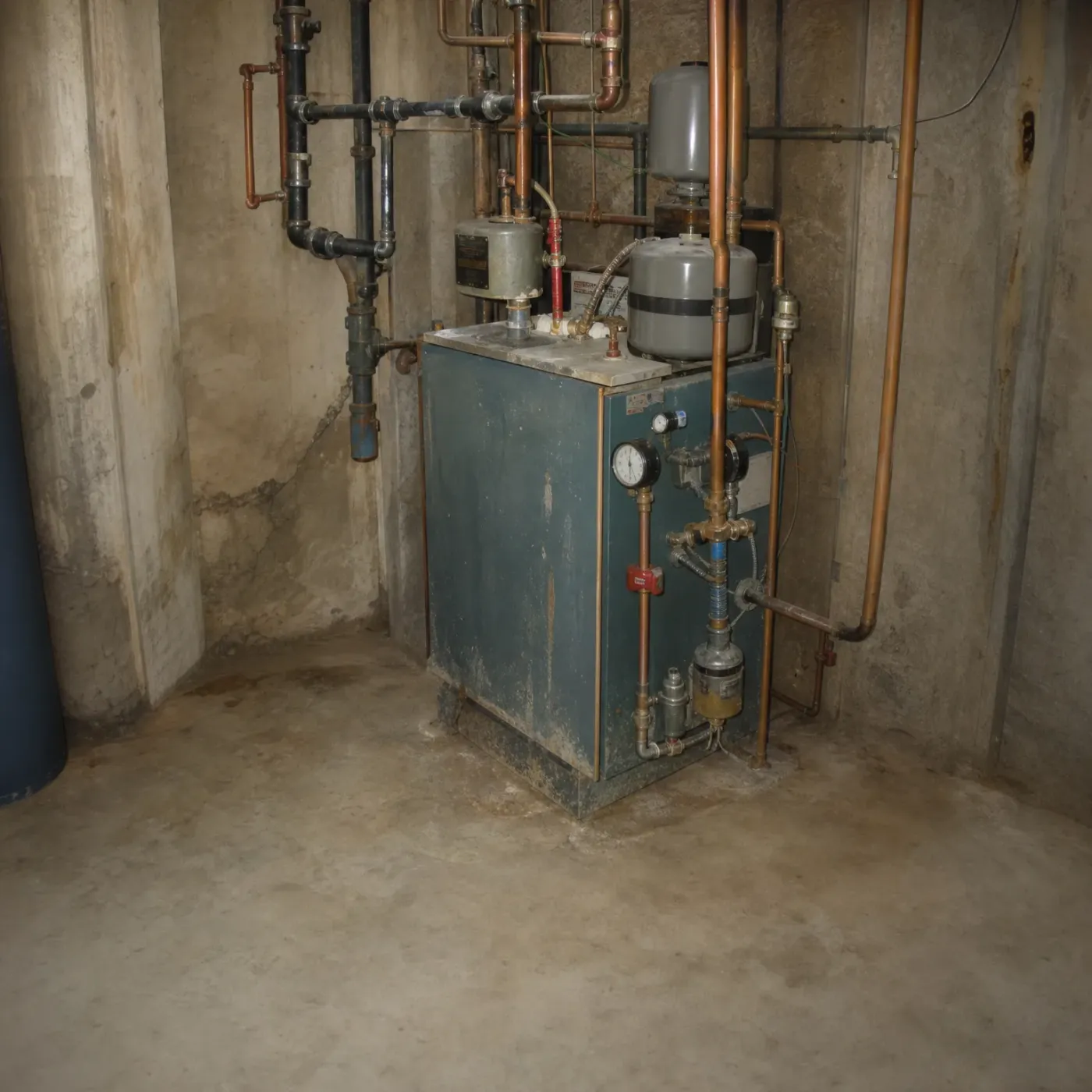
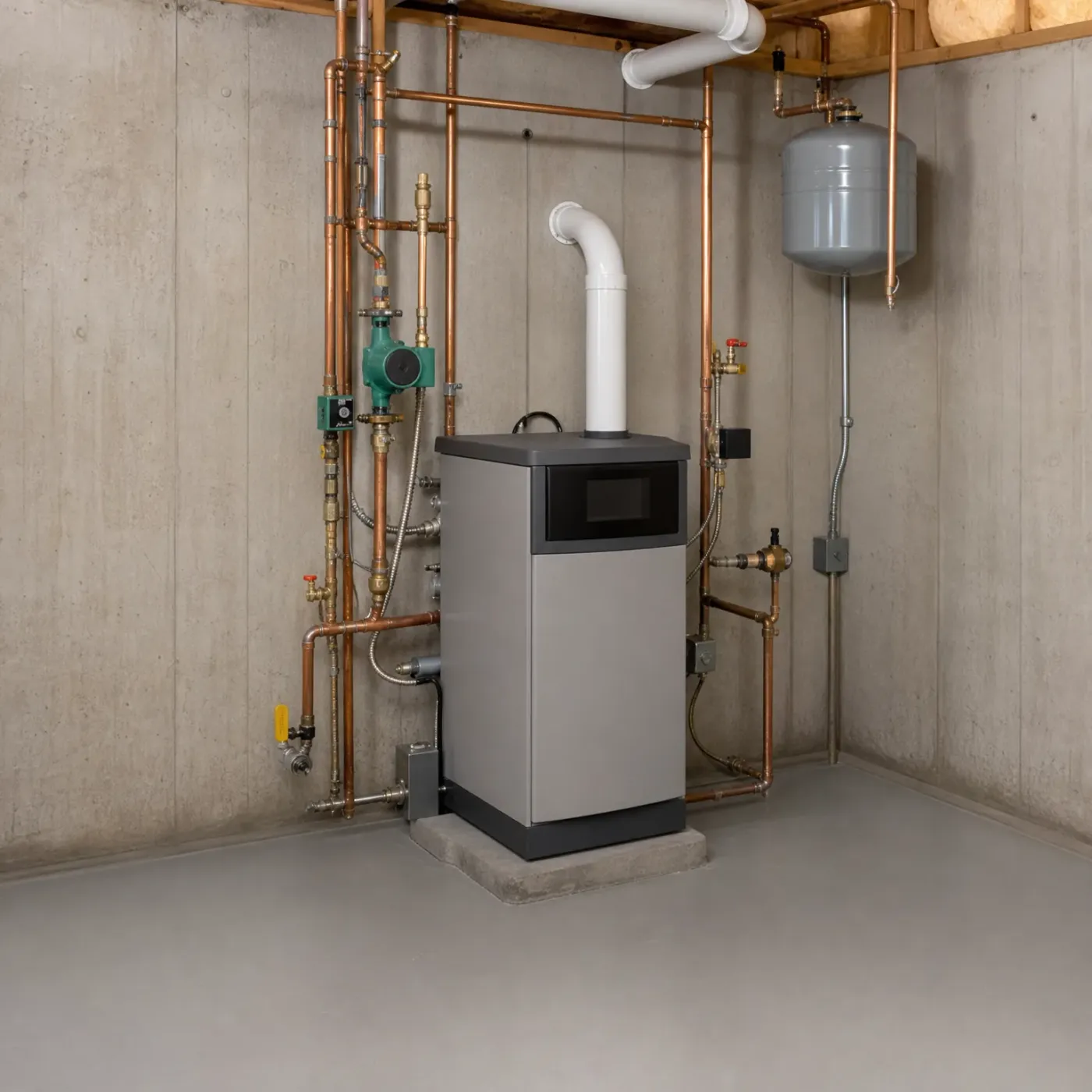
Before you get your boiler installationAfter you get your boiler installation
Winter nights here average 58°F, according to NOAA climate records for Broward County. That's mild enough that your boiler may only kick on for part of the night, then sit idle once the sun's up. A system that cycles on and off like that, rather than running steady for hours, is part of why boilers in this area tend to last as long as they do. But short, light use has a downside too. A boiler that rarely runs hard can develop problems slowly, without the clear signs you'd get from a system working all winter. If yours is old enough that you're not sure what shape it's in, getting it looked at now means you're not guessing when a cold snap actually hits. Submit your information and a contractor who knows these systems can reach out to take a look.
Send the form and the search for an installer is over.
Asking costs nothing, and the choice to hire stays yours.
Why a mild climate adds years
Steel and cast iron corrode faster when they stay hot and wet for long stretches. A boiler in a cold state holds heat for months at a time, and the metal inside never fully dries out between cycles. Here, a boiler cools down most days and most nights. That drying out matters more than people think. Rust needs moisture to spread, and a system that gets long breaks between runs gives that moisture less chance to do damage. It's part of why a boiler in Broward County can outlast the same unit running hard in a place like Minnesota or Maine.
What still wears it out
Mild winters don't stop wear completely. The water inside a boiler carries minerals, and every time the system heats and cools, those minerals settle somewhere, usually on the heat exchanger or along the bottom of the tank. Over 15 or 20 years, that buildup narrows, and the boiler has to work harder to move heat through it. A thermostat that cycles the system on and off a lot adds wear too, since each start puts more strain on the igniter and the pump than a long steady run would. Age alone doesn't retire a boiler. What builds up inside it does.
A boiler running clean
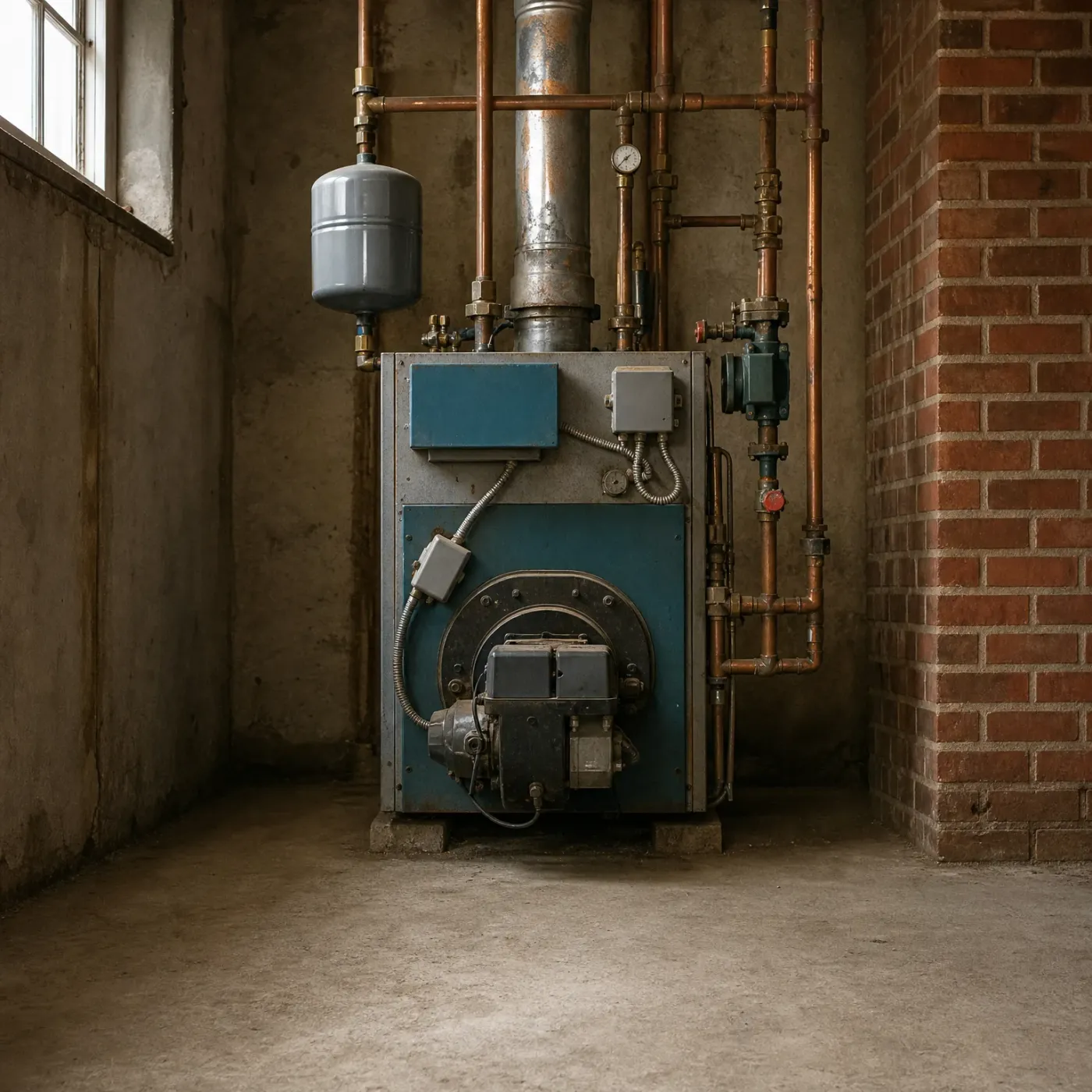
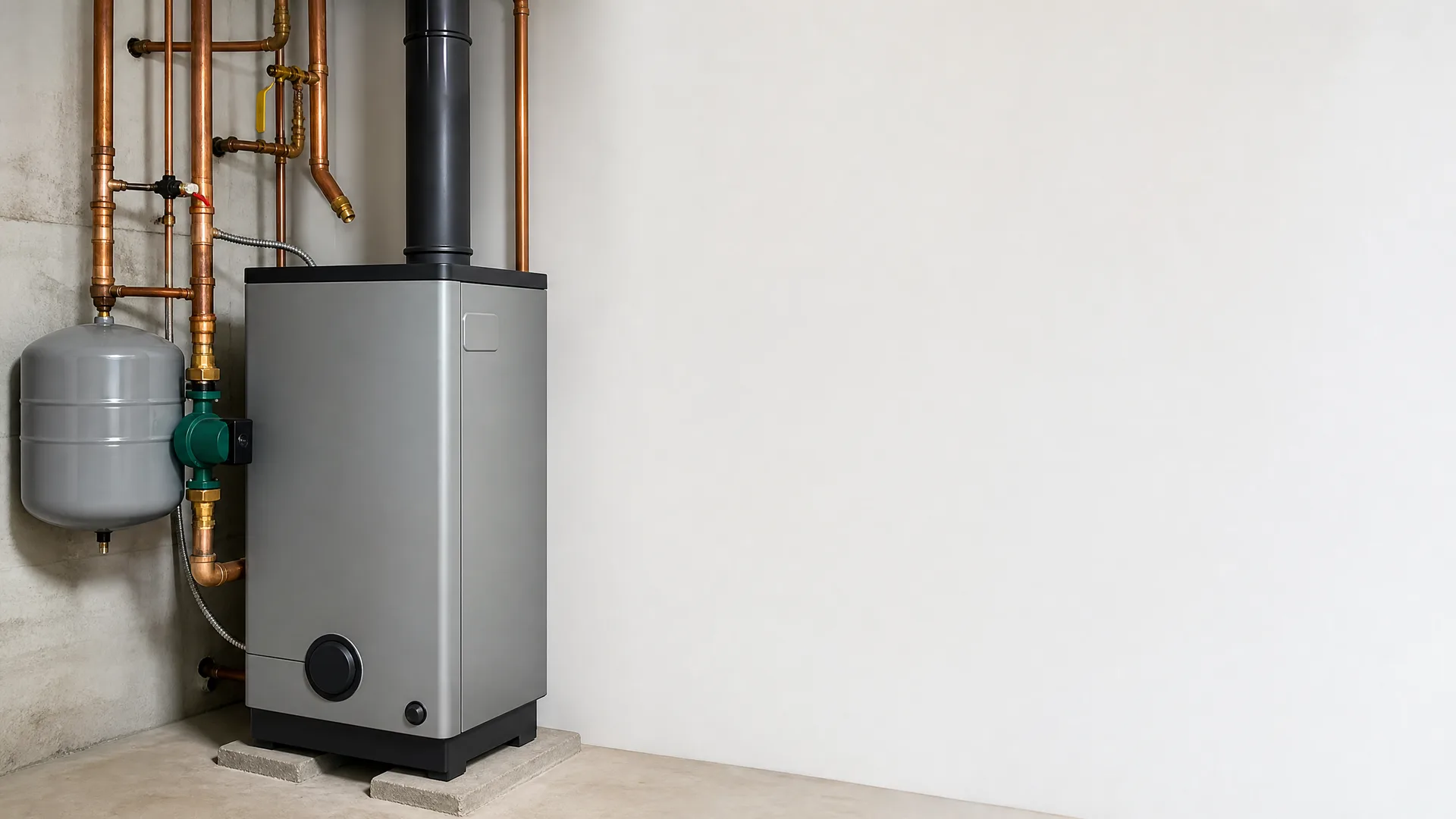
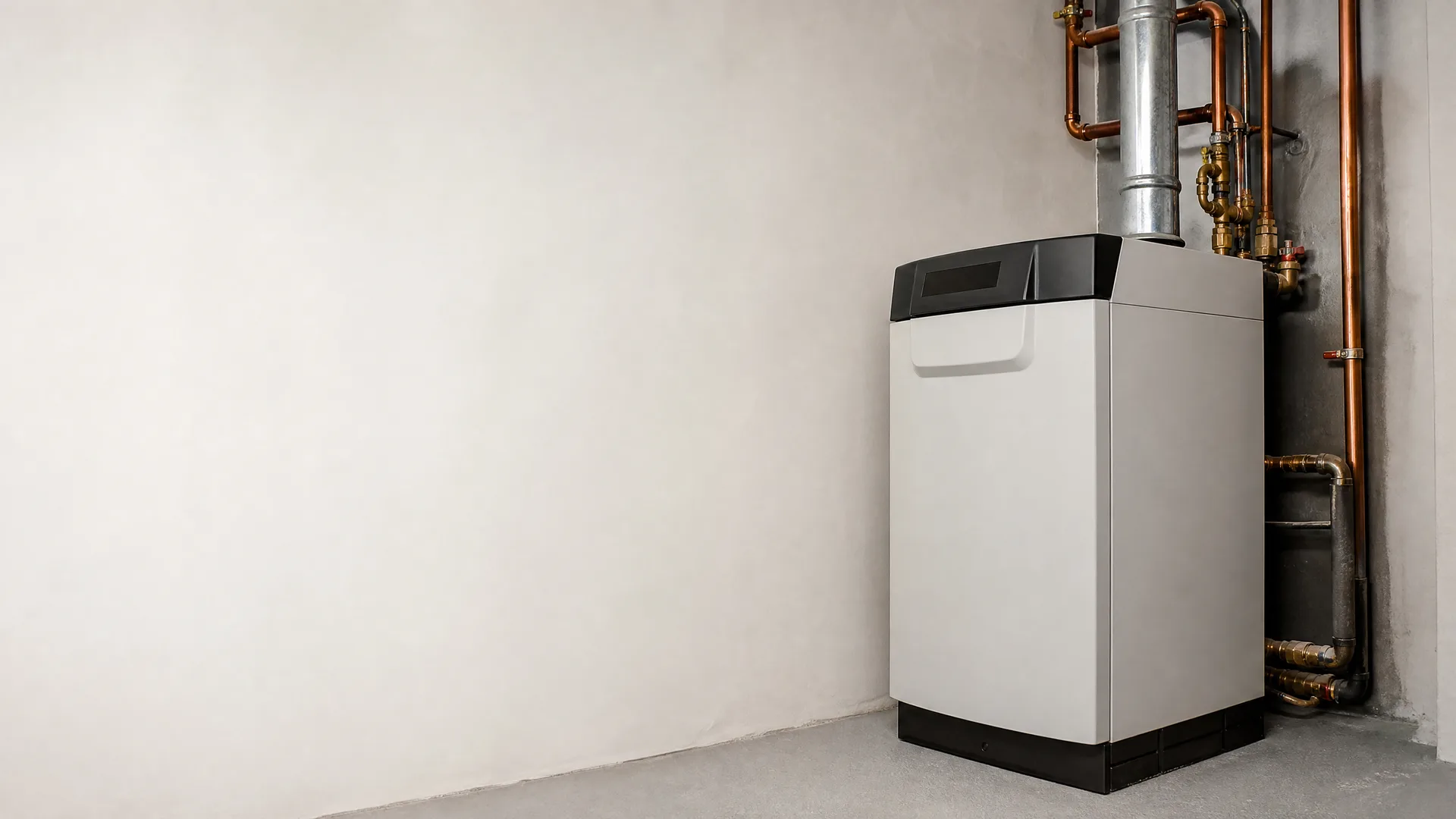
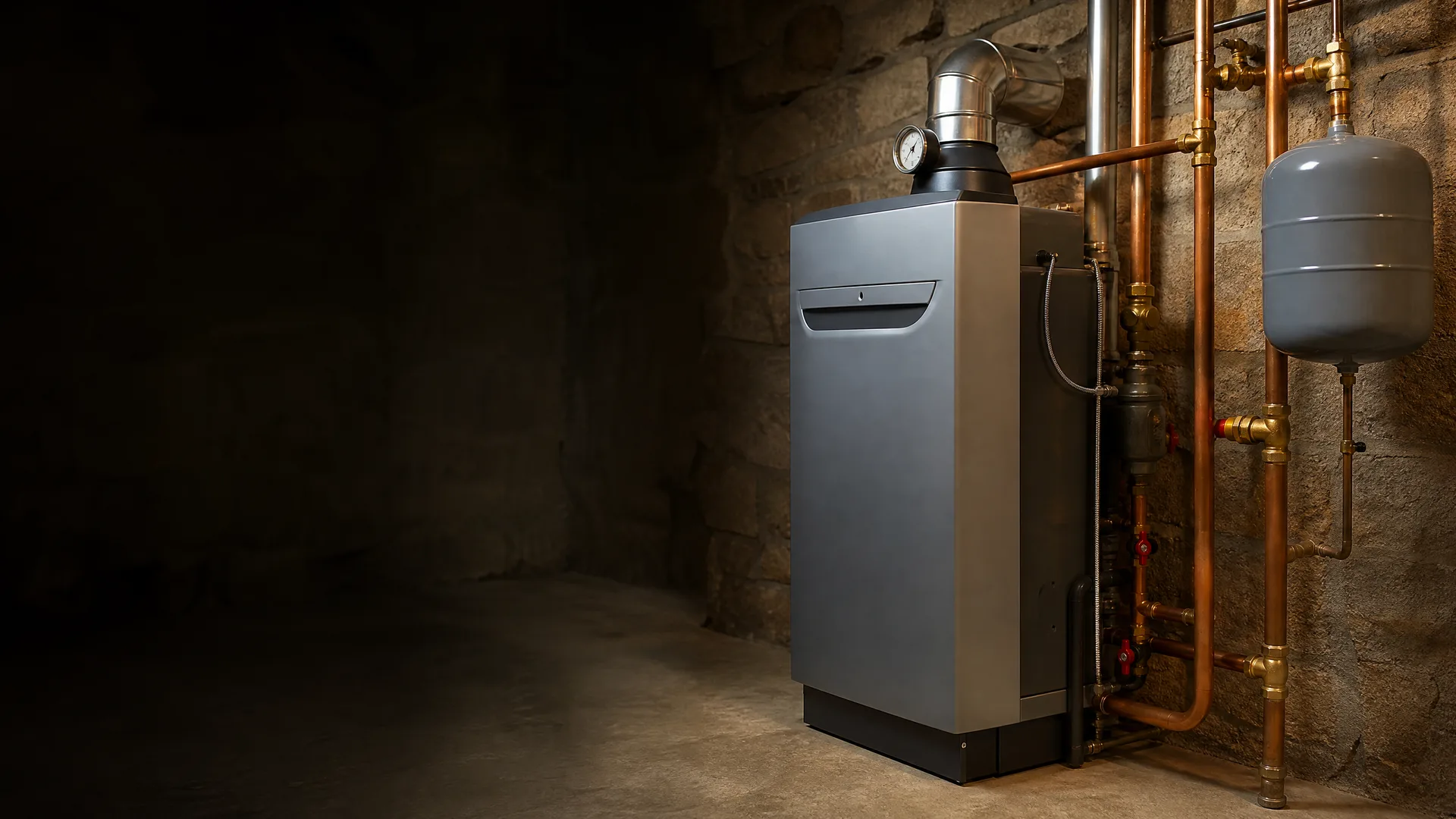
Clear water, steady pressure, a pump that doesn't strain. Pipes and fittings hold tight with no green or white crust at the joints. A boiler like this is still getting a full season's rest most years, and it shows in how quiet the mechanical room stays.
A boiler under strain
Rust bleeding down the tank, a pressure gauge that won't hold steady, valves stiff with mineral buildup. This is what years of small leaks and hard starts leave behind. Once a boiler looks like this, age stops being the only question, since the inside is wearing faster than the outside shows.
Winter nights average 58°F
A night that only drops to 58°F isn't cold enough to keep your boiler running steady. It fires in short bursts and spends plenty of time off, which spares the tank the slow wear that comes with hours of steady heat.
NOAA nClimDiv 1991-2020
What a long-idle boiler looks like
Check the boiler before you turn in some night this winter. If it's sat quiet most of the evening and only clicks on for a short stretch, that's normal here. What's worth noticing is what happens around it: a damp patch on the floor near the base, a faint metallic smell, or rust streaks running down from a fitting. Those don't show up from one cold night. They show up after years of a tank sitting full of water it rarely has to heat for long.
What a failing boiler costs you
A boiler that's corroding from the inside doesn't usually just stop. It leaks, slowly, until the pressure drops and the system can't hold heat at all. By then you're not looking at a small fix. You're looking at a tank that has to be replaced, along with whatever water damage happened to the floor or the closet it sat in while nobody noticed the leak. Catching it early, before the leak starts, is the difference between a planned install and an emergency one.
How do I know when my boiler is actually at the end of its life?
You've had the boiler a long time and nothing has failed outright, but you're starting to wonder if you're pushing your luck. There's no single day a boiler quits. You want to know what to actually watch for before a small problem turns into a flood in the utility closet.
Rust-colored water, a pressure that won't hold, or a pump that's noticeably louder than it used to be
Water that comes out of the drain valve rusty or discolored means corrosion has already gotten into the tank, not just the pipes. Pressure that keeps dropping and needs frequent refilling points to a leak somewhere in the system, even if you can't see it yet. A pump that's grinding or straining is working harder than it should, often because mineral buildup or corrosion is restricting flow. Any one of these on its own is worth a look. Two or more together, especially in a system that's already had 15 or 20 years of use here, usually means the tank is closer to failing than it is to another full season of mild Fort Lauderdale winters.
1
Cold water enters the tank and the burner or element fires
2
Heat transfers through the tank wall into the water
3
A pump pushes hot water out through the supply pipes
4
Radiators or baseboards release heat into each room
So, how long will yours last
Most boilers in Broward County make it 15 to 20 years, and plenty go longer than that. Mild winters are the reason. Yours isn't running hard enough, long enough, to wear itself out the way one would in a cold state. If you've kept an eye on the pressure, the water clarity, and the joints the way the signs above describe, you probably have a good read on where yours stands right now.
If you're seeing rust, a pressure that won't hold, or a boiler that's running longer than it used to, that's your system telling you it's closer to the end than the middle. You don't have to figure out the next step alone or spend time hunting for someone who knows boilers specifically. Answer a few questions about your system and a contractor who works on boilers in your area will reach out to you directly, so you can get a straight answer about yours instead of guessing from a national average.