


How long a boiler lasts in Florida

Get in touch with a local installer about a new boiler.

Request a pro

How long does a boiler last in Florida?

A boiler in a Florida home is not working as hard as one up north, since most houses here heat with electricity and the boiler sees only occasional use. That makes it harder to guess when it's getting old just by feel, and most owners want a real number before something fails on them.

A boiler in Florida typically lasts 15 to 20 years

That range holds for most boilers regardless of climate, since the tank and heat exchanger wear from age and mineral buildup more than from how often the burner fires. In a lot of Florida homes, a boiler runs for backup heat or supplemental hot water rather than daily winter use, so it may reach the far end of that range or beyond. Age alone does not tell you where yours stands. Rust at fittings, pilot trouble, uneven heat, or a tank that needs repair more than once a year are better signs than the calendar. Once a boiler is past 15 years, it is worth having someone look at it before a cold snap forces the question.

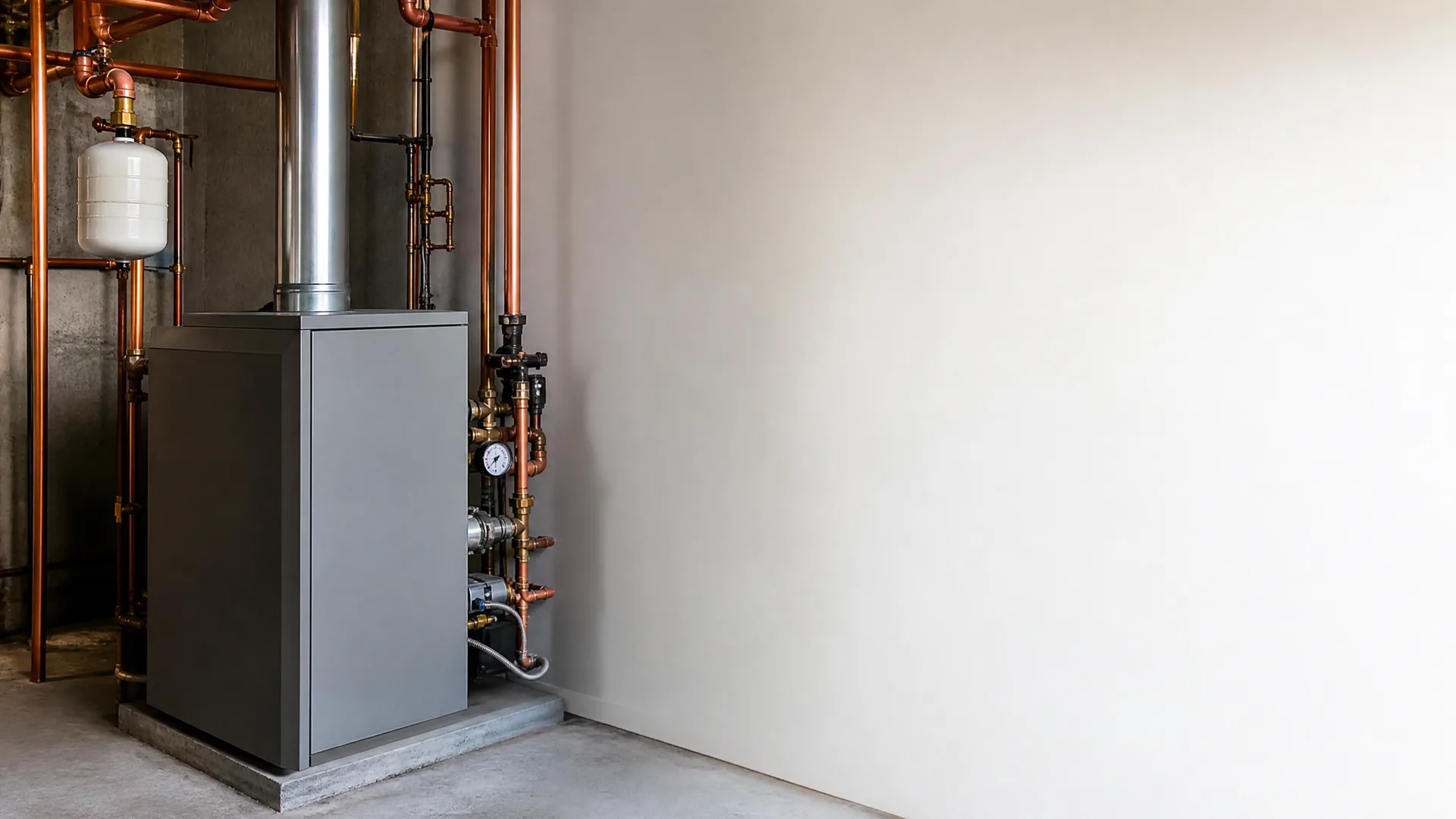
A grey floor-standing boiler with a metal flue and copper pipework, valves and a pressure gauge stands in the corner of a room with plain light walls and a concrete floor.

Why light use cuts both ways

A boiler that only fires on the coldest nights in Florida wears less than one running all winter up north. But parts also sit idle for months at a time between uses. Seals dry out, valves stick, and corrosion can set in on components that rarely get the chance to run long enough to burn off condensation inside the flue or chamber. Low use helps the boiler last, but it doesn't stop aging.

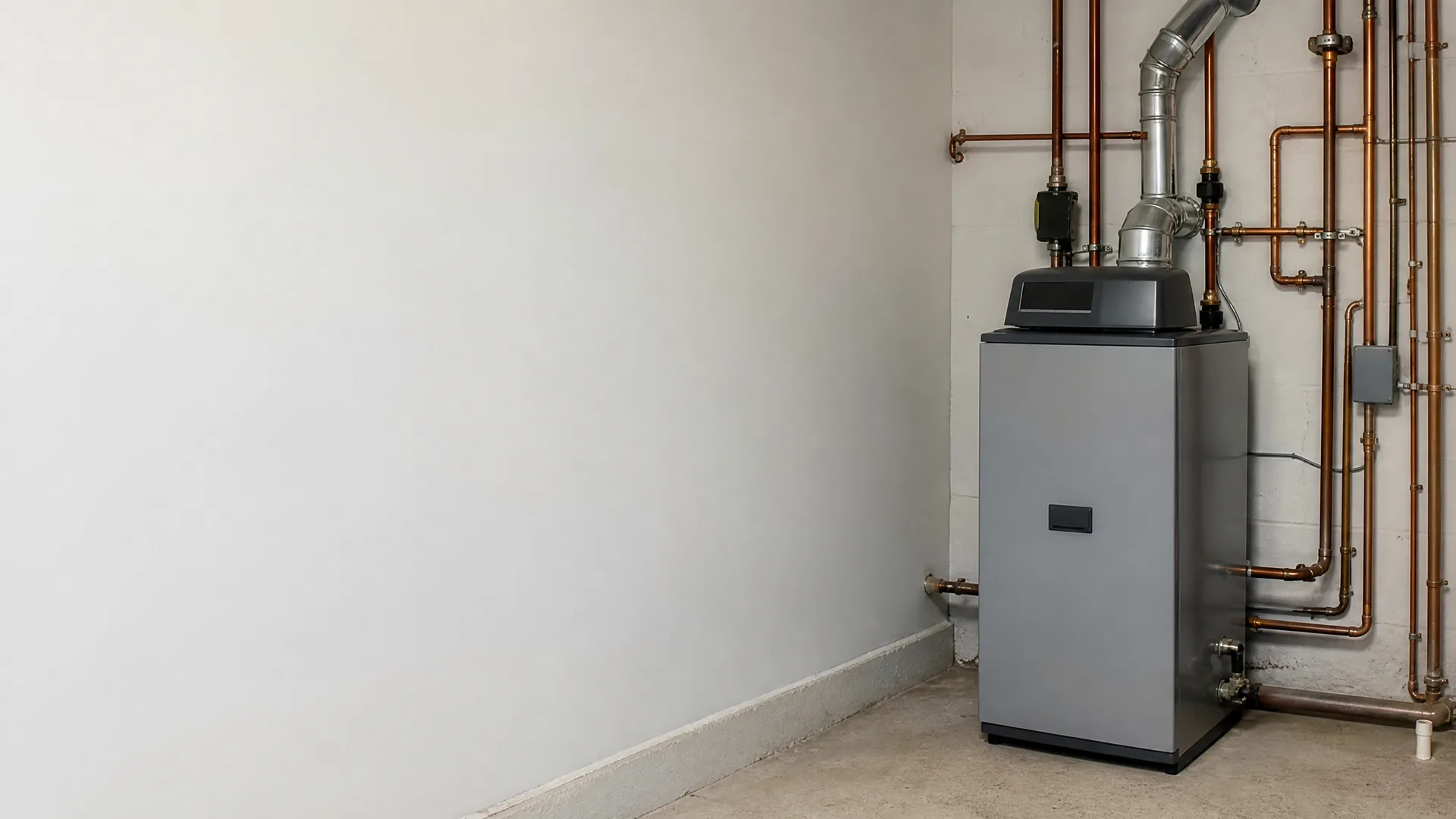
A gray floor-standing boiler with a metal flue pipe stands in the corner of a plain painted basement room, connected to copper pipes running along the wall.

What to check instead of age

Rather than counting years, look at the pilot or igniter, the heat exchanger, and whether the unit still holds pressure. Rust around the base, a pilot that won't stay lit, or water pooling near the tank are signs worth having looked at regardless of how old the unit is. If your boiler came with the house, you likely don't know its install date, so these signs tell you more than a guess ever could.

A woman in a cream sweater and jeans stands in the open doorway of a white stucco house, holding the dark door, while a man in a dark quilted jacket seen from behind walks toward the entry past potted plants.

If a boiler is already in your house

If your house came with a boiler already installed, you may not know how old it is or what shape it's in. That matters more here than up north, because a Florida boiler can look fine on the outside while sitting unused for months, and a problem that would show itself on night one in a cold climate might not show up until the first real cold snap hits. By then you're finding out at the worst time.

Worth having someone look at it rather than wait and see, especially if you've never had it serviced since moving in. A local contractor can tell you what you're actually working with: how old the unit is, whether it's worth repairing again, or whether replacing it now beats finding out the hard way in January. That's a different conversation than calling around and explaining your situation to five companies before you get a straight answer.

A gray upholstered sofa with a matching cushion sits beside a potted plant and a wooden table holding a small green plant in a stone pot, near a curtained window.
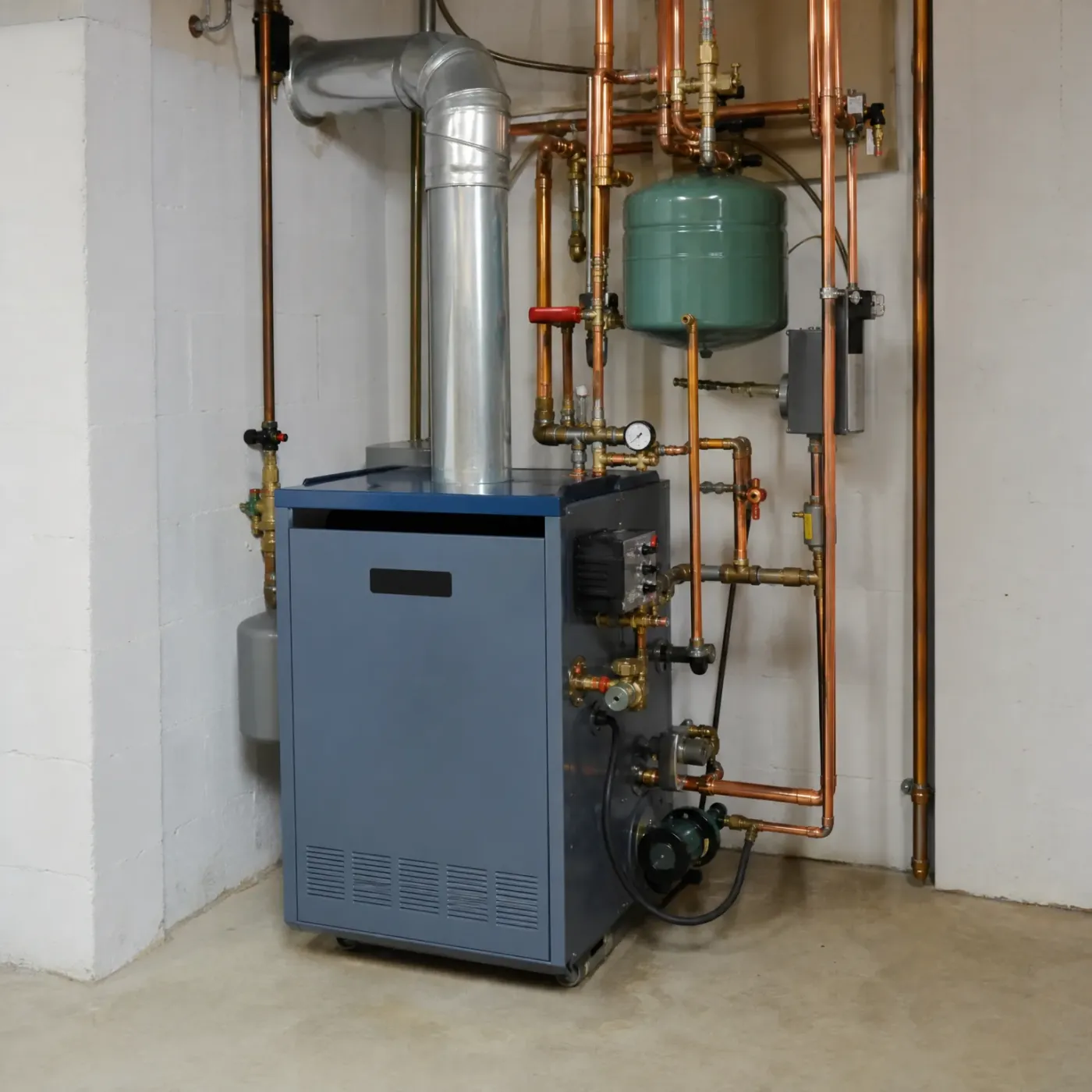
A blue-gray residential boiler in a basement corner, connected to copper piping, a green expansion tank, a circulator pump, gauges, and a metal flue pipe against painted block walls.

A boiler running the way it should

Copper pipes carry hot water out to the system, pressure holds steady on the gauge, and the expansion tank does its job absorbing changes in that pressure. No rust streaks, no soot around the flue pipe. This is what a boiler still has years ahead of it looks like.
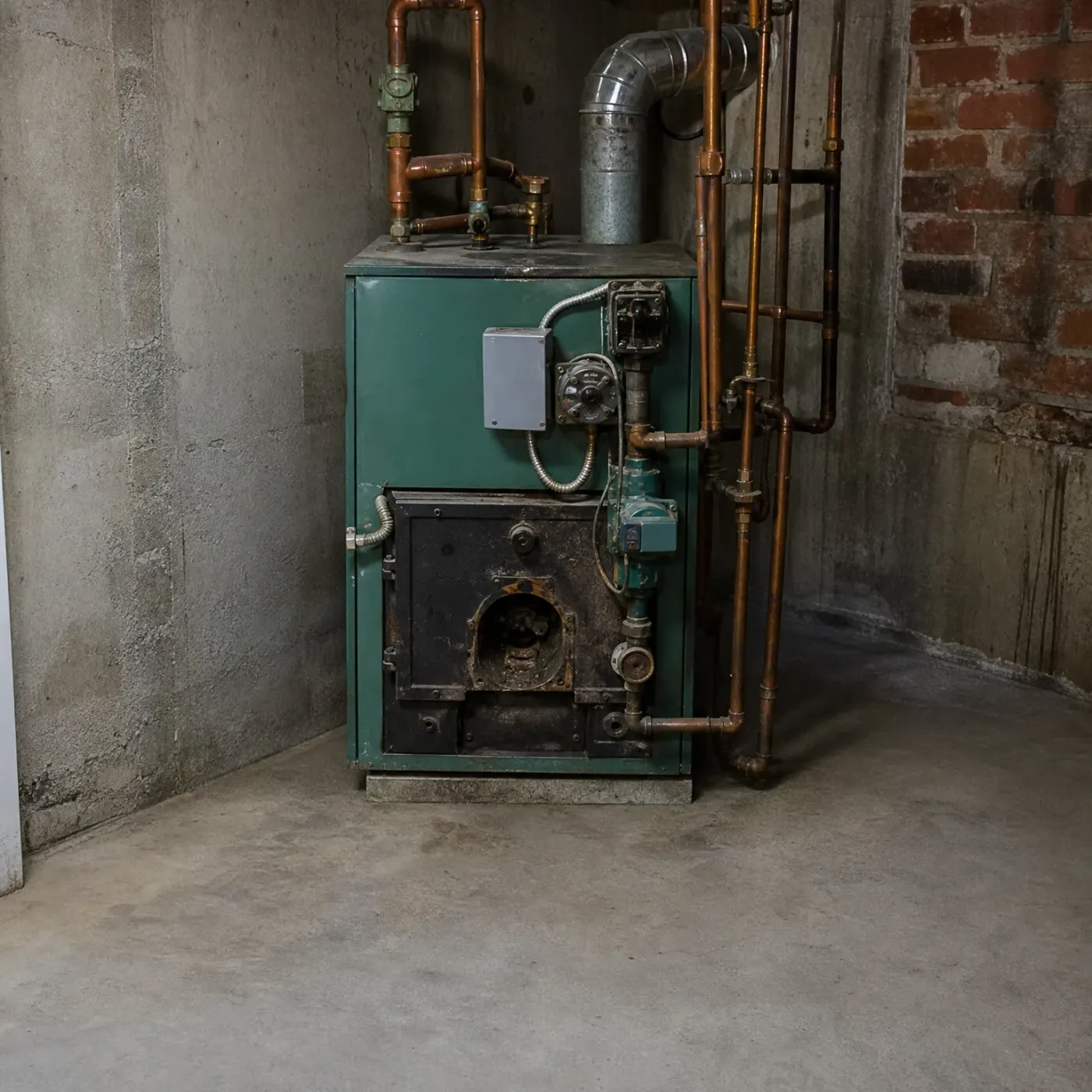

A green cast-iron boiler with a soot-stained front door, copper piping and a metal flue, standing on a concrete floor in a basement corner with concrete and brick walls.

A boiler that's given out

The firebox door sits open on a burner eaten through with rust. Bare concrete and brick around it haven't kept the damp off the metal. A boiler that looks like this one isn't a repair job anymore. It's time to talk about replacing it.

A gray-haired, bearded man in a dark coat dusted with snow stands smiling in a dimly lit room with a lamp, mirror, framed art, and a sofa in the background.
An older man with white hair and a beard, wearing a dark snow-dusted coat and scarf, stands in a warmly lit interior hallway with a framed landscape picture, a table lamp and a potted plant behind him, and a snowy view through a window at left.
An older man in a dark snow-flecked overcoat and scarf stands smiling in a warmly lit home entryway, with a glass-paned door showing darkness outside and a lamp-lit room visible through a doorway behind him.
An older man with gray hair and a beard, wearing a dark snow-dusted jacket and scarf, stands smiling in a warmly lit interior hallway with a lit table lamp, a vase of dried branches, and a framed picture in the background.
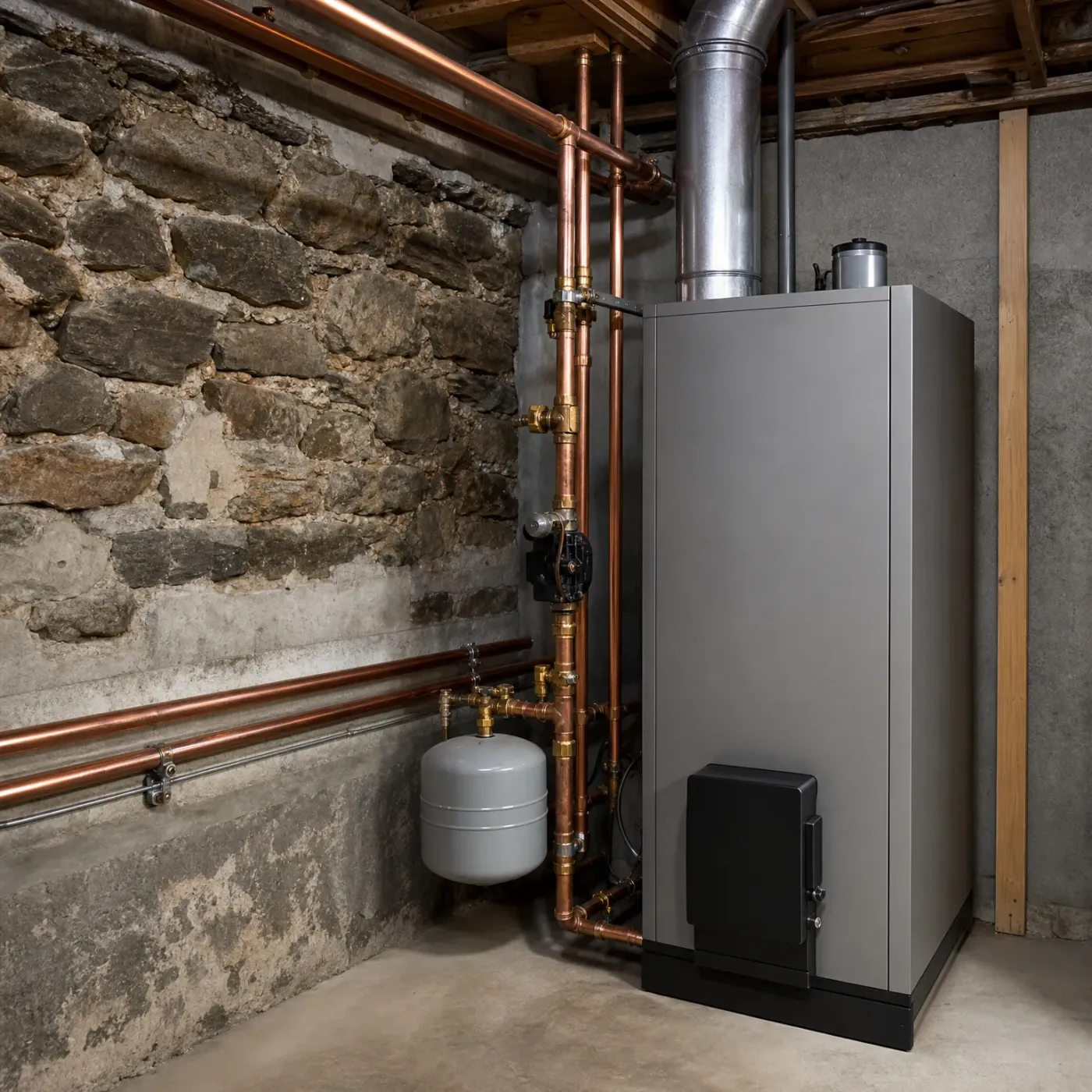
A gray boiler unit with a metal flue stands in a basement beside copper piping, valves and a small expansion tank, against a stone and concrete wall with wooden joists overhead.

A local pro for your boiler installation

Describe the project once instead of to every installer.

A local installer who puts in boilers gets your project.

Skip calling around

No fee to send it, and nothing to sign.

Keep the boiler or replace it

Keep it going

  • A boiler that's been flushed and inspected on a regular schedule can keep running years past when a neglected one would start failing.
  • If the heat exchanger and controls are sound, replacing a failed circulator pump or a bad zone valve can buy more time for less money.
  • A boiler installed well, with a properly sized expansion tank and clean water flowing through the system, tends to have fewer surprise failures.
  • Since the boiler only fires occasionally in a Florida home, the wear on the heat exchanger itself is often lighter than the calendar age suggests.
  • Keeping the same boiler means skipping the disruption of a new installation, including rerouting pipe or venting if the old unit sits in an odd spot.

Replace it now

  • Once the heat exchanger itself is leaking or cracked, no repair fixes that, and a new boiler is the only real option.
  • A boiler that sat unused for long stretches between the previous owner and you may have corrosion or stuck valves that only show up once it's asked to run.
  • Repeated repairs on the same unit, especially on the igniter or pressure relief valve, often mean the next failure is close behind.
  • A new installation lets you size the boiler correctly for your house, instead of living with whatever was put in originally.
  • If you don't know the age or condition of the boiler that came with your house, installing a new one removes that guesswork for good.
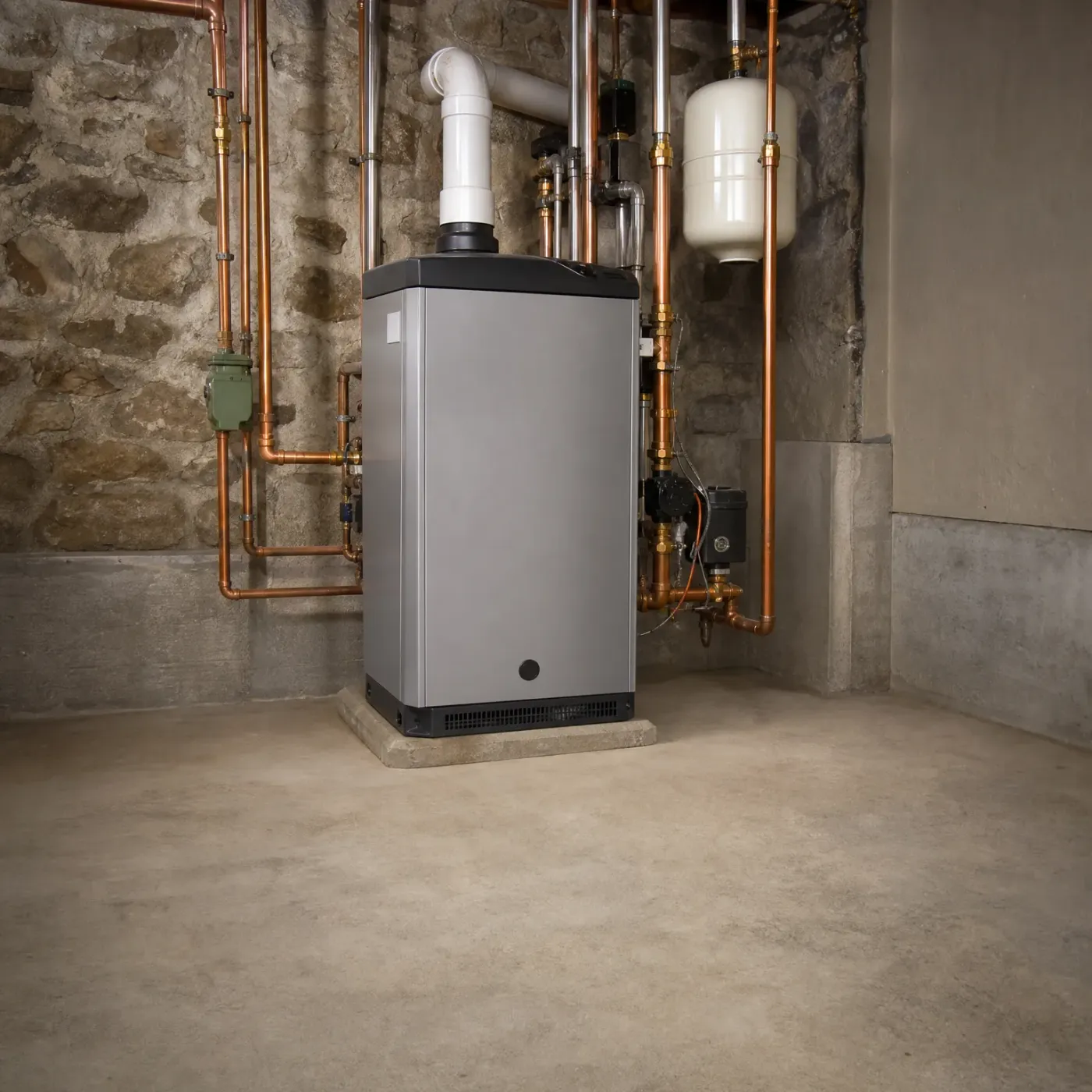
A gray floor-standing boiler on a concrete pad in a basement, connected to copper pipes, a white expansion tank, and a white PVC vent against a stone and concrete wall.

Working the way it should

This is a boiler doing its job. Pressure holds steady, the copper lines run clean to the system, and the expansion tank sits ready to absorb changes as the water heats. No rust on the fittings, nothing leaking onto the pad. In a Florida home, a boiler that looks like this can keep going a long time, since it only fires a handful of nights a year.

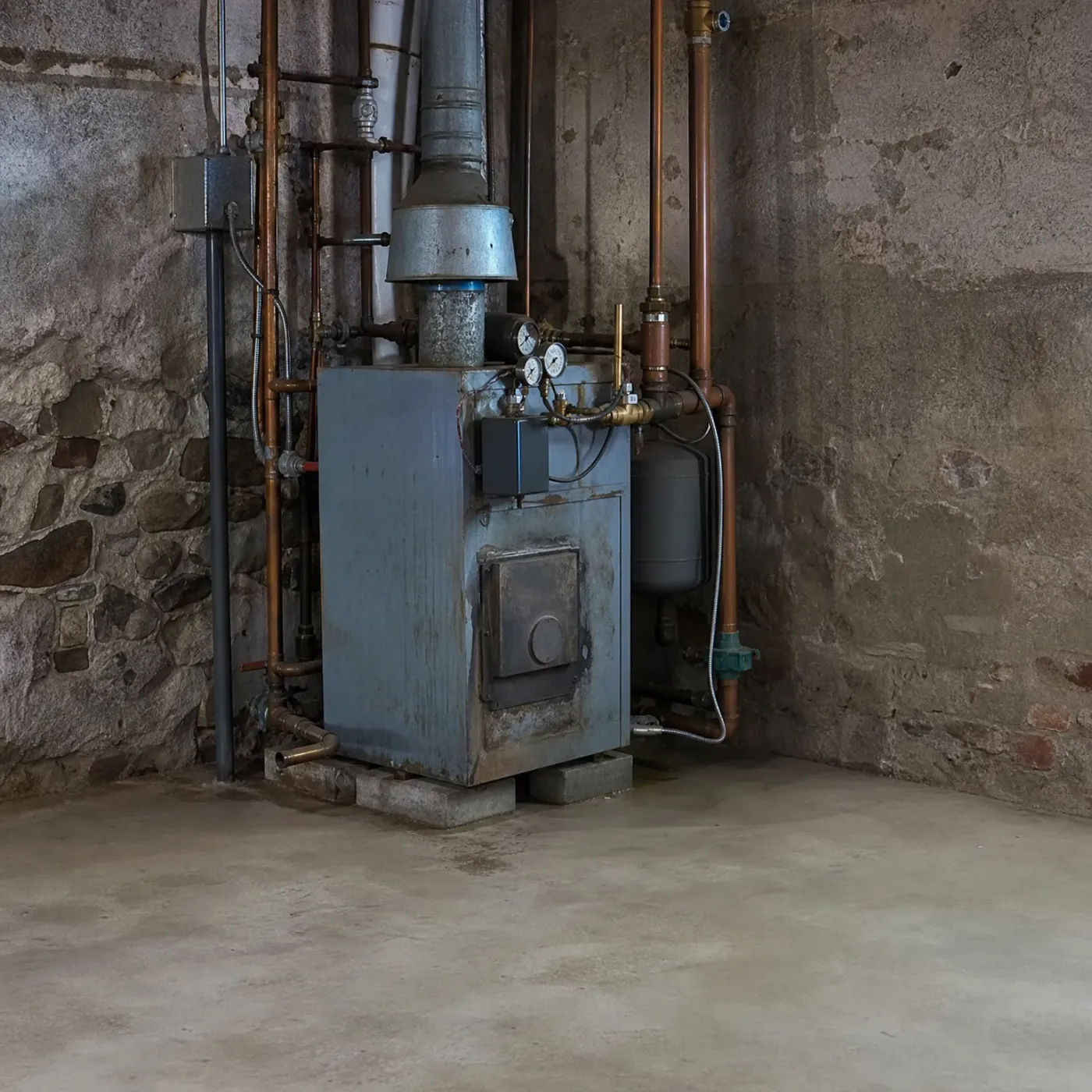
An older gray boiler with a metal flue, copper piping, pressure gauges and an expansion tank sits on concrete blocks in a basement corner with stone and concrete walls.

Old and worn down

This is what years of neglect look like. Cast iron holds up, but the gauges and valves around it don't last forever, especially when the unit sits idle most of the year and then gets asked to work on the first cold night. Rust on the fittings and a flue pipe like this one are signs the inside may be worse than what you can see.

Is your boiler telling you something right now

A boiler starting to fail doesn't go quiet about it. You might hear a kettle-like rumbling as it fires, or notice it takes longer to get hot water to the tap than it used to. Look at the floor under it for a damp spot or a chalky white residue, a sign of a slow leak. Check the pressure gauge: if it won't hold steady anymore, something in the system is losing water. A pilot light burning yellow instead of blue is worth a look too. Left alone, a leak can damage the floor or framing underneath, and a cracked heat exchanger can let combustion gases into the house.

  1. Cold water enters the boiler through the return line.

  2. The burner fires and heats water inside the heat exchanger.

  3. A circulator pump pushes hot water out to the system.

  4. The expansion tank absorbs pressure as the water heats.

Winter nights average 52°F statewide

A 52°F night doesn't ask much of a boiler. It only needs to bring the water up a little, then it shuts off again. That short, light cycle is normal here, and it's part of why a boiler can stay in service for years without ever working hard.

NOAA nClimDiv 1991-2020 county normals weighted by homes

A woman wrapped in a cream textured blanket sits in an armchair beside a lit lamp and a dark window, with an open book in the foreground.
A smiling older woman with gray hair in a cream knit sweater stands in a dimly lit kitchen beside a window showing snow outside, with a round loaf of bread on the counter in the foreground.

A boiler in a Florida home can run fifteen years or more, often longer, because it never faces the demands one up north deals with every winter. What ends its life here is usually age catching up with parts that sat unused for long stretches, not hard wear. Rust on the fittings, a pressure gauge that won't hold steady, or a pilot that won't stay lit are signs it's closer to the end than the middle. If you're trying to figure out where your boiler stands, that's a judgment call, and it helps to have someone look at the actual unit rather than guess from a list of symptoms. Instead of searching through contractors on your own, calling a few, explaining the same thing about your boiler each time, and sorting through quotes that are hard to compare, you can get matched with a contractor who installs boilers and let them reach out to you. Whether yours has years left or needs replacing, you'll know where you stand instead of wondering.

A dark basement with a gray boiler unit, expansion tank, and copper pipes along a concrete wall, with a steel support post and wooden stairs at right.

Get the right pro for your boiler

Answer a few questions instead of calling shop after shop.

Step 1 of 3: Equipment